
Description
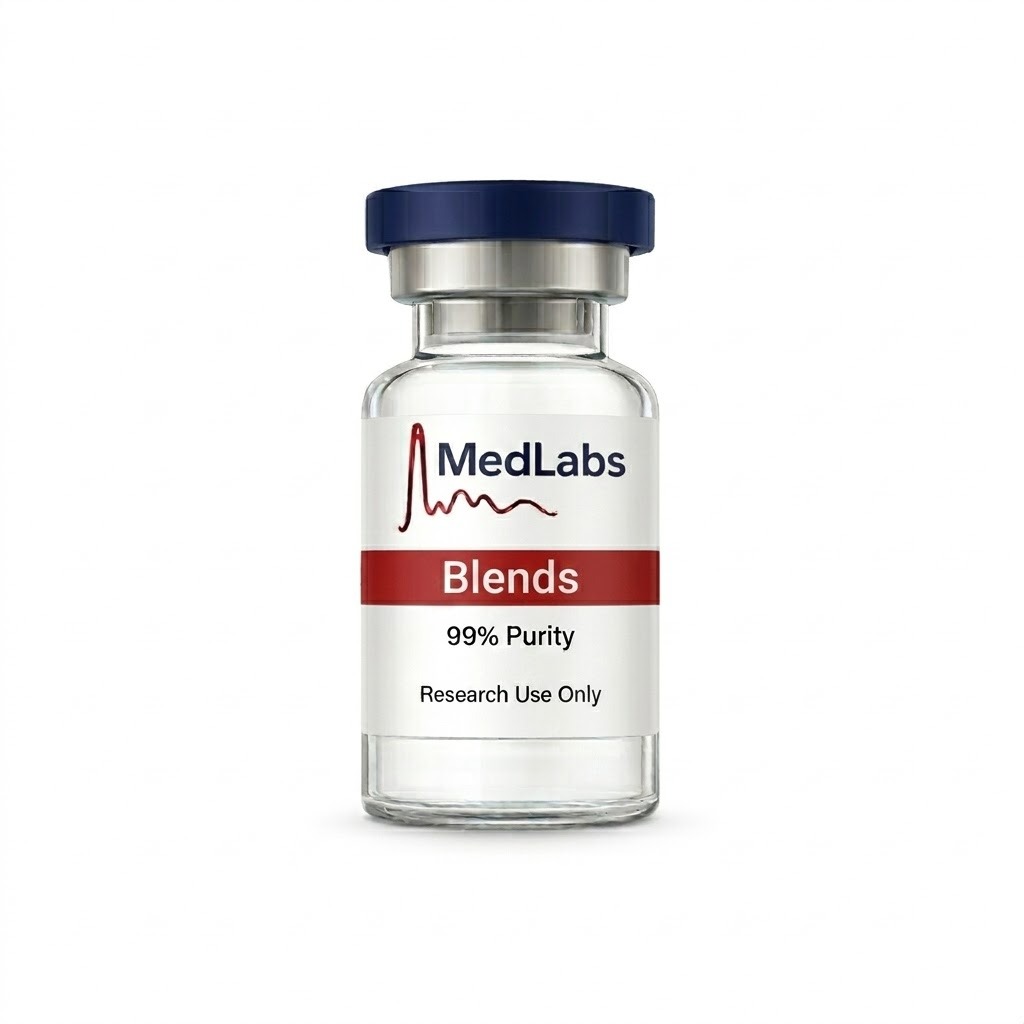
CJC-1295 & GHRP-6 Peptide Blend
Overview
The CJC-1295 & GHRP-6 peptide blend combines two well-known growth hormone secretagogues that have been extensively investigated in research settings for their potential influence on growth hormone production and release. Researchers suggest that when these peptides are used together, they may produce complementary effects that enhance the body’s natural growth hormone signaling pathways. This combination has attracted interest for its potential role in studies involving tissue recovery, cellular regeneration, and metabolic function.
GHRP-6 Peptide
GHRP-6 (Growth Hormone Releasing Peptide-6) is a synthetic hexapeptide developed to mimic certain biological activities associated with ghrelin, a naturally occurring hormone involved in growth hormone secretion. Research indicates that GHRP-6 may interact with growth hormone secretagogue receptors (GHS-R1a), potentially stimulating the release of endogenous growth hormone.
Although GHRP-6 activates similar receptors to ghrelin, its molecular structure differs significantly. Scientists classify it as a growth hormone secretagogue and have explored its potential influence on hormone regulation, tissue maintenance, and cellular recovery mechanisms.
CJC-1295 Peptide
CJC-1295 is a synthetic analog of growth hormone-releasing hormone (GHRH). It was designed to enhance stability and prolong biological activity compared with naturally occurring GHRH. The peptide contains several amino acid substitutions that may improve resistance to enzymatic degradation while maintaining receptor affinity.
Researchers have proposed that these structural modifications allow CJC-1295 to remain active for longer periods, potentially supporting sustained growth hormone signaling. Because of this extended activity profile, CJC-1295 has become a frequently studied compound in growth hormone research.
CJC-1295 With DAC vs. Without DAC
CJC-1295 is available in two primary forms: with DAC (Drug Affinity Complex) and without DAC. Both variants are designed to stimulate growth hormone release through similar biological pathways. However, the DAC version has been engineered to bind more effectively to circulating plasma proteins, which may significantly extend its duration of action.
The addition of the Drug Affinity Complex is believed to increase the peptide’s half-life, allowing it to remain active in circulation for several days while maintaining affinity for GHRH receptors.
Chemical Information
Molecular Formula
CJC-1295: C152H252N44O42
GHRP-6: C46H56N12O6
Molecular Weight
CJC-1295: 3367.9 g/mol
GHRP-6: 873.0 g/mol
Alternative Names
- Growth Hormone Releasing Peptide-6 (GHRP-6)
- CJC-1295 with DAC
- CJC-1295 without DAC
Research Highlights
Growth Hormone Secretion
Clinical investigations have explored the potential effects of CJC-1295 on circulating growth hormone concentrations. In controlled studies involving healthy adult participants, researchers observed substantial increases in growth hormone levels following administration of CJC-1295 compared with placebo groups. Some findings suggested that elevated hormone levels persisted for extended periods after exposure.
Research involving GHRP-6 has also demonstrated significant stimulation of growth hormone release. Studies examining oral and injectable administration methods reported measurable increases in hormone secretion across multiple age groups.
Potential Synergistic Activity
Several investigations suggest that combining a GHRH analog such as CJC-1295 with a growth hormone secretagogue like GHRP-6 may result in enhanced growth hormone release compared with either compound alone. Researchers theorize that the two peptides act through distinct but complementary pathways, potentially amplifying overall hormonal response.
Cellular Recovery and Tissue Support
Experimental studies have examined GHRP-6 for its possible involvement in cellular repair processes. Research findings indicate that the peptide may support cellular migration, tissue recovery mechanisms, and responses associated with injury repair. Additional investigations have explored interactions with CD36 receptors, which may influence inflammatory signaling, angiogenesis, and cellular maintenance.
Gastrointestinal Function
Animal research has evaluated the effects of growth hormone secretagogues on gastrointestinal motility. Findings suggest that GHRP-6 may positively influence gastric emptying and intestinal transit under certain experimental conditions, particularly in models involving metabolic dysfunction.
Cardiovascular Research
Preclinical studies investigating growth hormone-releasing hormone analogs have explored their potential role in supporting cardiac tissue recovery following injury. Researchers observed indications of improved cardiac performance, reduced tissue damage, and enhanced repair processes in experimental models.
Neuroprotective Potential
Scientists have also examined GHRP-6 for possible effects on neurological tissues. Research suggests that the peptide may influence insulin-like growth factor-1 (IGF-1) expression within specific regions of the brain. These findings have prompted further investigation into its potential involvement in cellular survival pathways and neuroprotective mechanisms.
Research Use Notice
The CJC-1295 & GHRP-6 peptide blend offered by Medlabs Peptides is intended strictly for laboratory and scientific research purposes. These compounds are not approved for human consumption, medical use, or therapeutic application. Researchers should review all available literature and applicable regulations before conducting studies.
Reviews
There are no reviews yet.