
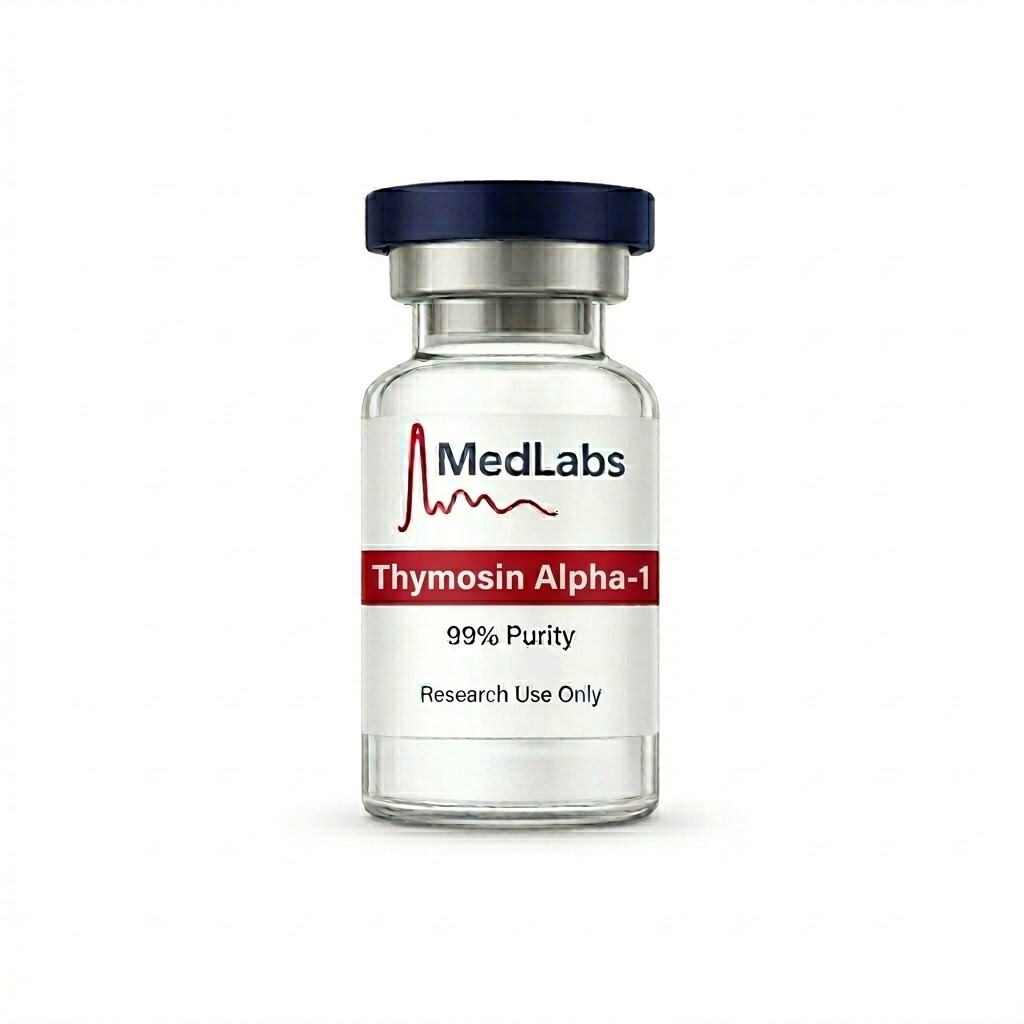
Description
Thymosin Alpha-1 Peptide – Research Grade (TA1)
Quick Specifications
Thymosin Alpha-1
- Molecular Formula: C129H215N33O55
- Molecular Weight: 3108.31 g/mol
- CAS Number: Not universally standardized
- Purity: ≥98% (HPLC)
- Appearance: White to off-white lyophilized powder
- Solubility: Soluble in sterile water or bacteriostatic water
- Storage: -20°C (long-term), 2–8°C (short-term after reconstitution)
- Pack Size: 5|10mg vial (custom sizes available)
Overview of Thymosin Alpha-1
Thymosin Alpha-1 is a synthetic peptide derived from a naturally occurring thymic polypeptide involved in immune system regulation. Researchers classify it as a 28-amino-acid peptide fragment cleaved from Prothymosin Alpha.
This compound has gained attention in peptide research due to its role in modulating immune signaling pathways. Scientists often study its interaction with T-cells, cytokines, and antigen-presenting cells.
In laboratory settings, it demonstrates potential influence on immune cell differentiation, particularly within T-helper and cytotoxic T-cell populations. It may also impact cytokine production and receptor expression, making it relevant for immunological research models.
At MedLabs Peptides, we supply high-purity peptides designed strictly for controlled laboratory research.
Mechanism of Action of Thymosin Alpha-1
How Thymosin Alpha-1 Peptide Interacts with Immune Pathways
The peptide interacts with multiple immune signaling pathways. It engages toll-like receptors (TLR-2 and TLR-9) located on dendritic cells and antigen-presenting cells. This interaction triggers downstream immune responses.
As a result, the peptide may increase the expression of cytokines such as:
- Interleukin-2 (IL-2)
- Interferon-gamma (IFN-γ)
- Interleukin-10 (IL-10)
Additionally, it may enhance major histocompatibility complex (MHC) class I expression, which supports antigen presentation.
Researchers also examine its influence on:
- Natural killer (NK) cell activity
- T-cell maturation and differentiation
- Akt signaling pathway modulation
- Reactive oxygen species (ROS) balance
When comparing what is the difference between TB 500 and thymosin alpha 1 is, scientists note that TA1 primarily targets immune modulation, while TB-500 focuses on actin dynamics and tissue repair pathways.
Research Applications
- Cell-based immune response studies
- Animal model research on immune modulation
- Receptor binding and cytokine signaling analysis
- Comparative peptide research (e.g., thymosin alpha 1 vs TB-500)
- Signal transduction and intracellular pathway studies
Common Research Questions
What is Thymosin Alpha-1 used for in research?
Researchers use it to study immune system signaling, T-cell differentiation, and cytokine regulation.
Does Thymosin Alpha-1 affect immune signaling pathways?
Yes. It interacts with toll-like receptors and influences cytokine production and T-cell activity.
What is the difference between TB 500 and Thymosin Alpha-1?
It focuses on immune modulation, while TB-500 primarily affects actin binding and tissue repair mechanisms.
Is thymosin alpha 1 safe for everyone?
This compound is not approved for human use. It is strictly limited to laboratory research environments.
How long does it take thymosin alpha 1 to work in studies?
Timeframes vary depending on experimental design, model system, and dosage parameters.
Handling & Storage
- Store lyophilized peptide at -20°C for long-term stability
- Keep the reconstituted solution at 2–8°C and use within the recommended timeframe
- Reconstitute using sterile or bacteriostatic water
- Avoid repeated freeze-thaw cycles
- Protect from direct light and heat exposure
Safety & Compliance
- FOR RESEARCH USE ONLY
- Not for human or veterinary use
- Not intended for diagnosis, treatment, or prevention of disease
- Use only by qualified professionals in controlled laboratory settings
- Users assume full responsibility for safe handling and application
About MedLabs Peptides
MedLabs Peptides provides high-purity research compounds with strict quality control standards.
medlabspeptides.com
Reviews
There are no reviews yet.