
Description
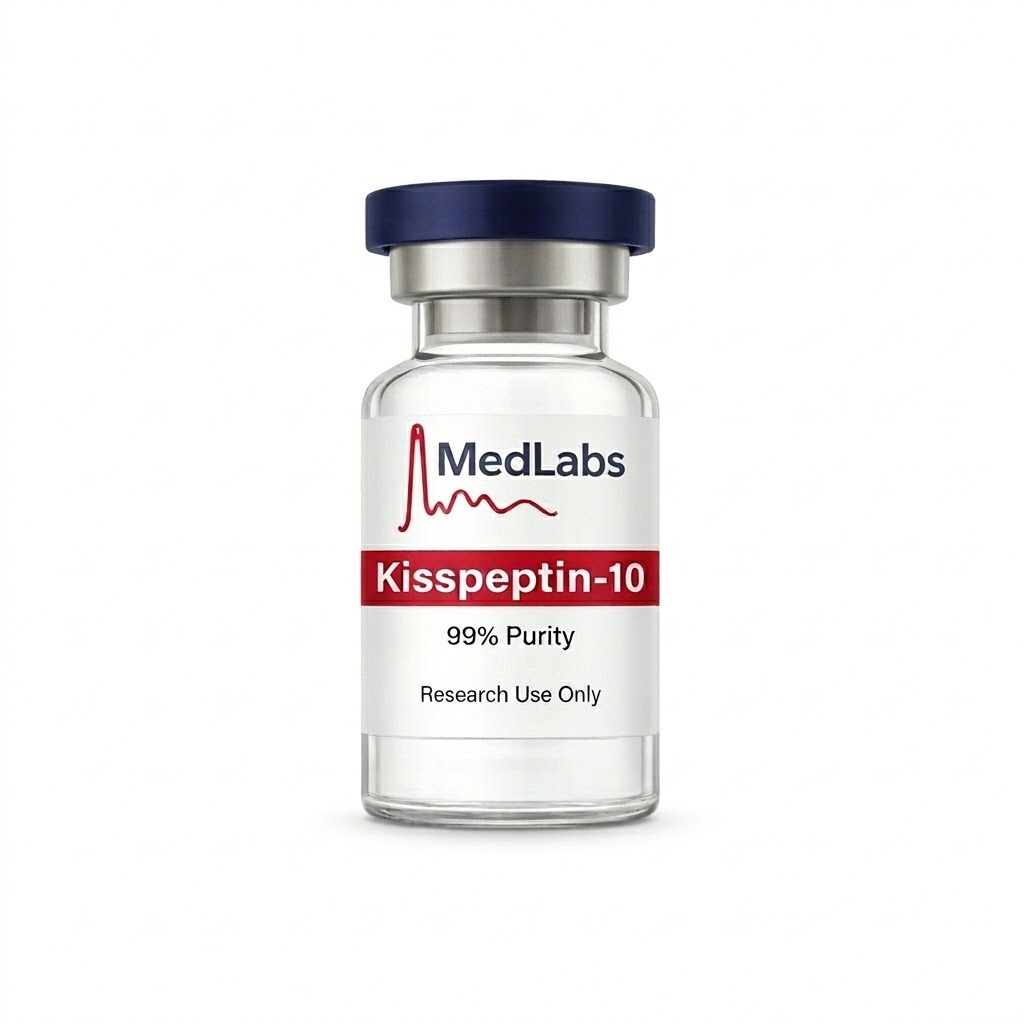
Kisspeptin-10 Peptide – Research Compound Overview
Overview
What Is Kisspeptin-10?
Kisspeptin 10 dosage is a synthetic decapeptide derived from the naturally occurring kisspeptin protein family. Researchers widely study this peptide for its interaction with the GPR54 receptor, also known as KISS1R, which plays a central role in reproductive hormone signaling and neuroendocrine regulation.
Scientists frequently investigate kisspeptin-10 dosage parameters in preclinical research involving gonadotropin-releasing hormone (GnRH) signaling, hypothalamic function, and reproductive endocrinology. Its short peptide structure allows rapid receptor interaction, making it valuable for receptor-binding and signal transduction studies.
At Medlabs Peptides, each batch of Kisspeptin-10 undergoes purity verification through analytical testing methods such as HPLC to support laboratory-grade research standards.
Researchers continue to explore the compound in hormonal pathway analysis, reproductive biology models, and comparative peptide investigations involving endocrine-regulating peptides.
Quick Specifications
| Specification | Details |
|---|---|
| Product Name | Kisspeptin-10 |
| Peptide Sequence | Tyr-Asn-Trp-Asn-Ser-Phe-Gly-Leu-Arg-Phe-NH2 |
| Molecular Formula | C63H83N17O14 |
| Molecular Weight | 1302.45 g/mol |
| CAS Number | 374675-21-5 |
| Purity | ≥98% (HPLC Tested) |
| Appearance | White lyophilized powder |
| Solubility | Soluble in sterile water or bacteriostatic water |
| Storage | Store at -20°C |
| Stability | Stable under recommended storage conditions |
| Pack Size | 5mg / 10mg vial options |
Overview
Kisspeptin-10 Mechanism of Action
Kisspeptin-10 primarily binds to the KISS1 receptor (GPR54), a G-protein-coupled receptor involved in reproductive hormone regulation. Once activated, the receptor stimulates intracellular signaling pathways that influence the release of gonadotropin-releasing hormone from hypothalamic neurons.
This signaling cascade may subsequently affect luteinizing hormone (LH) and follicle-stimulating hormone (FSH) activity in experimental models. Because of this mechanism, researchers often examine kisspeptin-10 dosage for men and female reproductive pathway models in endocrine-focused investigations.
Several studies also evaluate kisspeptin-10 dosage schedule protocols to determine receptor sensitivity, peptide half-life behavior, and downstream signaling responses. In comparative peptide studies, scientists analyze how kisspeptin-10 differs from other GnRH-modulating compounds in receptor activation efficiency and signaling duration.
Researchers investigating metabolic signaling and performance pathways occasionally reference kisspeptin-10 bodybuilding dosage discussions within experimental endocrine literature. However, these discussions remain strictly research-focused and do not establish therapeutic or performance-related outcomes.
Research Applications
- Cell-based receptor activation studies
- Animal model endocrine research
- GPR54/KISS1 receptor binding assays
- Comparative peptide signaling studies
- Neuroendocrine pathway investigations
- Signal transduction research
- Hormonal regulation pathway analysis
- GnRH secretion pathway studies
Common Research Questions
What is Kisspeptin-10 used for in research?
Researchers use Kisspeptin-10 in studies involving reproductive hormone signaling, hypothalamic regulation, and GPR54 receptor activation pathways.
How fast does Kisspeptin-10 work in experimental models?
Kisspeptin-10 demonstrates rapid receptor interaction due to its short-chain peptide structure. Response timing varies based on study design and administration method.
Does Kisspeptin work for men in research settings?
Research involving male endocrine models often examines kisspeptin signaling and its relationship with GnRH, LH, and reproductive hormone pathways.
Does Kisspeptin-10 increase sperm volume?
Some experimental studies investigate reproductive hormone responses associated with Kisspeptin-10 activity. Current research remains exploratory and does not support clinical conclusions.
Kisspeptin-10 vs similar peptides
Compared with other reproductive signaling peptides, Kisspeptin-10 directly targets the KISS1 receptor pathway, making it useful in focused receptor-binding and neuroendocrine research.
What factors influence kisspeptin-10 dosage schedules in research?
Researchers evaluate peptide concentration, receptor sensitivity, study duration, and administration intervals when designing kisspeptin-10 dosage schedules.
Handling & Storage
- Store lyophilized peptide at -20°C
- Protect from direct light and moisture
- Reconstitute using sterile laboratory-grade solvent
- Avoid repeated freeze-thaw cycles
- Refrigerate reconstituted solution at 2–8°C for short-term use
- Use proper sterile handling procedures during preparation
- Maintain sealed storage conditions to preserve peptide stability
Safety & Compliance
FOR RESEARCH USE ONLY
Kisspeptin-10 supplied by Medlabs Peptides is intended strictly for laboratory and scientific research purposes.
- Not for human consumption
- Not for veterinary use
- Not approved for therapeutic or diagnostic applications
- Not intended to prevent, treat, or cure disease
- Researchers and laboratories assume full responsibility for handling and experimental use
All users should follow applicable laboratory safety protocols and regulatory guidelines when handling research peptides.
Why Researchers Choose Medlabs Peptides
- High-purity research peptides
- Analytical quality verification
- Secure packaging and cold-chain handling practices
- Research-focused peptide catalog
- Consistent manufacturing standards
Reviews
There are no reviews yet.