
Description
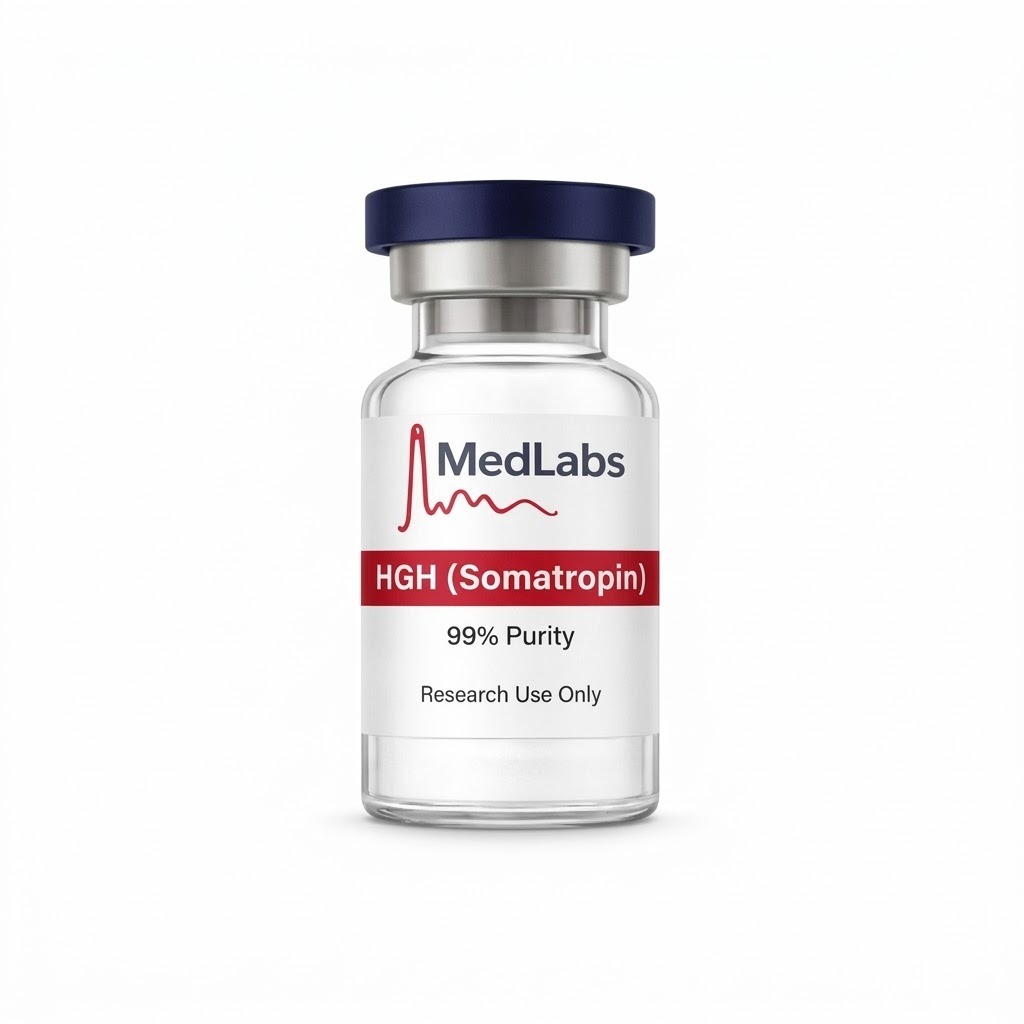
HGH Peptides | Somatropin 191AA Recombinant Human Growth Hormone | MedLabs Peptides
Quick Specifications
HGH peptides
| Parameter | Value |
|---|---|
| Common Name | Somatropin (recombinant Human Growth Hormone) |
| Synonyms | HGH 191AA, rHGH, Somatotropin, Pure Peptide HGH |
| CAS Number | 12629-01-5 |
| Molecular Formula | C₉₉₀H₁₅₂₈N₂₆₂O₃₀₀S₇ |
| Molecular Weight | ~22,124 Da |
| Amino Acid Sequence | 191 amino acids (identical to pituitary-derived HGH) |
| Purity | ≥98% (by HPLC and SDS-PAGE) |
| Appearance | White to off-white lyophilised powder |
| Storage | –20°C or below, desiccated, protected from light |
| Solubility | Soluble in sterile water and dilute acetic acid solutions |
| Pack Size | 10 IU / 100 IU (research vials) |
Overview
HGH peptides — based on the recombinant 191-amino acid sequence of human growth hormone — represent one of the most structurally complex and extensively characterised polypeptides in endocrine and metabolic research. Somatropin is the recombinant DNA-derived form of human growth hormone (HGH), produced via expression systems that replicate the full 191-amino acid sequence identical to the endogenous hormone secreted by the anterior pituitary gland. As a large polypeptide hormone, somatropin is classified within the somatotropin family and acts through a well-defined receptor-mediated signalling architecture that governs growth, metabolism, and cellular repair processes.
In research settings, somatropin is used as both a reference standard and an active molecular tool for investigating growth hormone receptor (GHR) signalling, IGF-1 axis regulation, and anabolic pathway dynamics. Its structural identity to endogenous HGH makes it the benchmark compound in growth hormone biology, distinguishing it from indirect secretagogues such as sermorelin, CJC-1295, or GHRP-class peptides that stimulate pituitary HGH release rather than delivering the hormone directly.
Scientific literature indexed on PubMed spans decades of research using recombinant somatropin across metabolic disease models, body composition studies, tissue repair investigations, and receptor pharmacology. Peer-reviewed research confirms somatropin’s central role in understanding anabolic signalling, lipolytic pathways, and insulin–IGF-1 axis crosstalk in preclinical systems.
MedLabs Peptides supplies research-grade somatropin at verified purity for laboratory and preclinical use. This material is not approved for, nor intended for, human or veterinary administration of any kind.
Mechanism of Action
Growth Hormone Receptor Binding and JAK-STAT Signalling
Somatropin exerts its biological activity by binding directly to the growth hormone receptor (GHR), a single-pass transmembrane receptor belonging to the class I cytokine receptor superfamily. Receptor activation follows a sequential two-site binding model: a single somatropin molecule engages two GHR monomers, inducing receptor dimerisation. This dimerisation event is the obligate initiating step for downstream intracellular signalling.
Upon GHR dimerisation, the receptor-associated Janus kinase 2 (JAK2) undergoes transphosphorylation and activation, initiating the JAK2/STAT5 signalling cascade. Phosphorylated STAT5 dimers translocate to the nucleus and function as transcription factors, regulating the expression of target genes including IGF1 (insulin-like growth factor 1), SOCS (suppressors of cytokine signalling), and a range of metabolic enzyme genes. This JAK2/STAT5 axis is the primary anabolic signalling route downstream of GHR activation and is the principal pathway through which somatropin regulates IGF-1 biosynthesis in the liver and peripheral tissues.
Beyond JAK-STAT signalling, somatropin activates parallel intracellular pathways. The MAPK/ERK pathway is engaged downstream of GHR activation, regulating cell proliferation and differentiation responses. PI3K/AKT pathway activation contributes to glucose uptake, protein synthesis, and anti-apoptotic signalling. Additionally, somatropin modulates insulin signalling through IRS-1 (insulin receptor substrate 1) phosphorylation, a mechanism that explains the well-documented insulin-antagonistic effects of chronic GH exposure in metabolic research models.
The net downstream effect of somatropin–GHR engagement in preclinical systems includes stimulation of hepatic IGF-1 synthesis, promotion of lipolysis in adipose tissue via hormone-sensitive lipase (HSL) activation, enhancement of amino acid uptake and protein synthesis in muscle tissue, and modulation of carbohydrate metabolism through anti-insulin mechanisms. These multifaceted effects make somatropin a comprehensive molecular tool for studying anabolic and metabolic signalling simultaneously.
Researchers should note that somatropin’s activity is pulsatile in endogenous physiology. In continuous-exposure research models, receptor downregulation and altered SOCS-mediated feedback may develop over time — a consideration relevant to chronic dosing study designs investigating what happens during sustained HGH exposure in animal systems.
Research Applications
- Growth hormone receptor (GHR) binding studies — Characterising receptor dimerisation kinetics, two-site binding models, and competitive ligand displacement assays using somatropin as the reference standard
- JAK2/STAT5 signal transduction research — Investigating phosphorylation kinetics, STAT5 nuclear translocation, and downstream transcriptional responses in GHR-expressing cell lines
- IGF-1 axis regulation studies — Preclinical liver cell and in vivo rodent models examining somatropin-induced IGF-1 biosynthesis and IGF-1 receptor cross-activation dynamics
- Metabolic and lipolytic pathway research — Animal model investigations of somatropin’s effects on adipose tissue lipolysis, free fatty acid mobilisation, and insulin sensitivity parameters
- Anabolic signalling and muscle metabolism models — Cell-based and in vivo studies examining PI3K/AKT-mediated protein synthesis, nitrogen retention, and muscle fibre composition under somatropin treatment conditions
- Insulin–GH axis crosstalk investigations — Research into IRS-1 phosphorylation, insulin resistance induction, and glucose metabolism modulation relevant to metabolic disease models
- Comparative HGH peptide pharmacology — Head-to-head studies contrasting direct somatropin administration with indirect GH secretagogues (sermorelin, CJC-1295, GHRP-2, GHRP-6, Ipamorelin) in terms of GHR activation and IGF-1 output
- Body composition research models — Preclinical studies examining lean mass preservation, fat mass reduction, and connective tissue dynamics under controlled somatropin dosing conditions
- Receptor desensitisation and feedback studies — Characterising SOCS-mediated GHR feedback, receptor downregulation, and IGF-1-driven negative feedback on pituitary somatotroph activity
Common Research Questions
What is HGH peptide (somatropin) used for in research?
In preclinical and laboratory research, HGH peptides — specifically recombinant somatropin 191AA — are used to study growth hormone receptor pharmacology, JAK2/STAT5 signal transduction, IGF-1 axis regulation, and metabolic pathway modulation. Somatropin serves as the reference compound in growth hormone biology because its 191-amino acid sequence is structurally identical to endogenous pituitary HGH. Scientific literature indexed on PubMed documents its application across metabolic disease models, anabolic signalling studies, and body composition research in preclinical systems.
Is HGH a peptide, and how does somatropin differ from HGH secretagogues?
Yes — HGH (human growth hormone) is classified as a polypeptide hormone, making somatropin technically a member of the HGH peptides category. However, it is important to distinguish somatropin from indirect HGH peptides such as GHRP-6, GHRP-2, Ipamorelin, CJC-1295, and sermorelin. These secretagogue compounds stimulate the pituitary gland to release endogenous HGH by activating GHSR-1a or GHRH receptors. Somatropin, by contrast, is the hormone itself — it binds directly to the growth hormone receptor (GHR), bypassing pituitary regulation entirely. This distinction is central to research designs requiring direct GHR engagement versus upstream neuroendocrine modelling.
What does HGH peptide (somatropin) do at the cellular level?
At the cellular level, somatropin binds to GHR and initiates receptor dimerisation, activating the JAK2/STAT5 cascade, MAPK/ERK pathway, and PI3K/AKT signalling. These pathways collectively regulate IGF-1 gene expression, protein synthesis, lipolysis, cell proliferation, and anti-apoptotic responses in GHR-expressing tissues. Peer-reviewed research confirms that the downstream cellular effects are highly context-dependent — varying by cell type, receptor expression level, and experimental dosing parameters.
How does somatropin interact with insulin signalling pathways?
Somatropin modulates insulin signalling through IRS-1 phosphorylation, which can induce insulin resistance in metabolic research models under sustained exposure conditions. This GH–insulin axis interaction is a recognised area of preclinical investigation relevant to type 2 diabetes and metabolic syndrome research. Studies examining what happens under daily HGH exposure in animal models consistently report progressive alterations in glucose homeostasis parameters, making somatropin a valuable tool for modelling GH-excess metabolic states.
Who should be excluded from HGH peptide research models, and what are the limitations?
In preclinical research model selection, investigators should consider that somatropin’s anabolic and metabolic effects are significantly modulated by age-related GHR expression changes, baseline IGF-1 levels, and sex hormone status. Research questions about what age is too late for HGH-related pathway studies are relevant in the context of ageing biology — elderly animal models demonstrate reduced GHR sensitivity and attenuated IGF-1 responses compared to younger subjects, which may limit comparability across study cohorts. Appropriate age-matched controls and baseline endocrine profiling are recommended in study designs.
How does somatropin compare to pure peptide HGH and 191AA variants?
Research-grade somatropin — sometimes referenced as pure peptide HGH or HGH 191AA somatropin peptide — refers specifically to the full 191-amino acid recombinant sequence without modification or truncation. Some commercially available preparations use 192-amino acid or modified sequences that introduce methionine residues or alternative N-termini due to bacterial expression system constraints. These structural differences can affect receptor binding affinity and immunogenicity in animal models. MedLabs Peptides supplies the authentic 191AA sequence to ensure experimental reproducibility consistent with published preclinical literature.
Will somatropin affect muscle-related signalling in preclinical models?
Preclinical studies using somatropin in animal models have documented activation of PI3K/AKT/mTOR pathways in skeletal muscle tissue, which regulate protein synthesis and nitrogen balance. Whether somatropin builds muscle in the context of research models depends on experimental variables including dosing frequency, co-administered compounds, nutritional state, and the specific model organism. Researchers asking about somatropin’s muscle-related signalling should design dose–response studies incorporating mTOR activation markers, MPS (muscle protein synthesis) tracers, and IGF-1 receptor expression assays to characterise pathway engagement comprehensively.
Handling & Storage
- Lyophilised vial storage — Store sealed vials at –20°C or below, desiccated and protected from light; do not expose to ambient temperature for extended periods before reconstitution
- Reconstitution solvent — Reconstitute using sterile bacteriostatic water (0.9% benzyl alcohol) or dilute acetic acid solution (0.1M); use 1–2 mL per vial depending on the desired working concentration
- Gentle dissolution — Do not vortex; roll or swirl the vial gently until the powder is fully dissolved; foaming or vigorous agitation may denature the protein
- Filter sterilisation — For in vivo research applications, filter through a 0.22 µm sterile membrane immediately before use
- Aliquoting — Divide reconstituted solution into single-use aliquots before freezing to eliminate repeated freeze–thaw exposure
- Post-reconstitution storage — Store reconstituted aliquots at 2–8°C if using within 14 days; store at –20°C for longer-term retention; do not refreeze thawed aliquots
- Stability note — How long somatropin is good for post-reconstitution depends on storage conditions; bacteriostatic water extends stability compared to plain sterile water; manufacturer-specified shelf life applies to lyophilised vials only
- Light and heat sensitivity — Protect from UV and direct light at all stages; somatropin is sensitive to thermal degradation above 25°C
- Pre-use inspection — Inspect reconstituted solution for particulates, cloudiness, or colour changes before use in any biological assay system
Safety & Compliance
⚠️ FOR RESEARCH USE ONLY
Somatropin (HGH peptide) supplied by MedLabs Peptides is intended exclusively for in vitro and preclinical in vivo laboratory research. It is not approved, licensed, or intended for human consumption, veterinary use, therapeutic application, or diagnostic purposes of any kind.
- This product has not been evaluated by the MHRA, FDA, EMA, or any equivalent regulatory authority for human or veterinary clinical use
- No therapeutic, performance, anti-ageing, or health claims are made or implied by MedLabs Peptides
- Somatropin is a controlled or prescription-regulated compound in many jurisdictions; all purchases and use must comply with applicable national laws and institutional regulations
- All research use must comply with relevant ethical oversight requirements, institutional biosafety protocols, and international guidelines governing recombinant protein research and animal experimentation
- The purchasing institution and individual researchers bear full responsibility for regulatory compliance, ethical approvals, and appropriate experimental use
- MedLabs Peptides accepts no liability for misuse, off-label application, or outcomes arising from research conducted using this material
Scientific References
- Kopchick JJ & Andry JM. Growth hormone, its receptor, and action. Growth Hormone & IGF Research. 2000. PubMed indexed.
- Brooks AJ & Waters MJ. The growth hormone receptor: mechanism of activation and clinical implications. Nature Reviews Endocrinology. 2010. PubMed indexed.
- Møller N & Jørgensen JOL. Effects of growth hormone on glucose, lipid, and protein metabolism in human subjects. Endocrine Reviews. 2009. PubMed indexed.
- Vijayakumar A et al. Biological effects of growth hormone on carbohydrate and lipid metabolism. Growth Hormone & IGF Research. 2010. PubMed indexed.
- Veldhuis JD et al. Somatotropic axis regulation at the level of the somatotrope. Reviews in Endocrine and Metabolic Disorders. 2009. PubMed indexed.
Reviews
There are no reviews yet.