

Retatrutide Peptide vs Tirzepatide: Differences, Mechanisms, Benefits, and Research Comparison
Introduction
As interest in metabolic health and weight management research continues to grow, two peptides frequently discussed are tirzepatide vs retatrutide. Both compounds have attracted attention due to their unique mechanisms of action and their potential role in supporting research related to body weight regulation, glucose metabolism, and energy balance.
While these peptides share some similarities, they are not identical. Understanding the differences between retatrutide and tirzepatide can help readers better understand current scientific discussions and ongoing research in this area.
This guide explores the topic of retatrutide peptide vs tirzepatide, including how they work, key differences, potential effects, side effects being studied, and frequently asked questions.

What Is Retatrutide?
Retatrutide is an investigational peptide designed to activate three different hormone receptors involved in metabolic regulation:
- GLP-1 (Glucagon-Like Peptide-1)
- GIP (Glucose-Dependent Insulinotropic Polypeptide)
- Glucagon receptor
Because it targets three pathways simultaneously, retatrutide is often referred to as a “triple agonist.”
Researchers are studying retatrutide for its potential influence on appetite regulation, energy expenditure, and metabolic function.
What Is Tirzepatide?
Tirzepatide is a peptide that activates two hormone receptors:
- GLP-1 receptor
- GIP receptor
This dual-action mechanism has made tirzepatide a significant topic in metabolic and obesity-related research.
Unlike retatrutide, tirzepatide does not directly activate the glucagon receptor, which represents one of the major differences between the two compounds.
How Do Retatrutide and Tirzepatide Work?
Tirzepatide Mechanism of Action
Tirzepatide works by mimicking the activity of naturally occurring hormones that help regulate:
- Appetite
- Food intake
- Insulin secretion
- Blood sugar regulation
The combined GLP-1 and GIP receptor activation may contribute to improved metabolic signaling.
Retatrutide Mechanism of Action
Retatrutide incorporates the same GLP-1 and GIP activity while adding glucagon receptor stimulation.
Researchers believe this third mechanism may influence:
- Energy expenditure
- Fat metabolism
- Metabolic efficiency
The additional glucagon receptor activity is one reason retatrutide is frequently compared to tirzepatide in current scientific discussions.
Retatrutide Peptide vs Tirzepatide: Key Differences
| Feature | Retatrutide | Tirzepatide |
|---|---|---|
| Receptor Targets | GLP-1 + GIP + Glucagon | GLP-1 + GIP |
| Classification | Triple Agonist | Dual Agonist |
| Research Focus | Weight regulation, metabolism, energy expenditure | Weight regulation, glucose control |
| Development Status | Investigational | Approved in certain indications |
| Glucagon Activity | Yes | No |
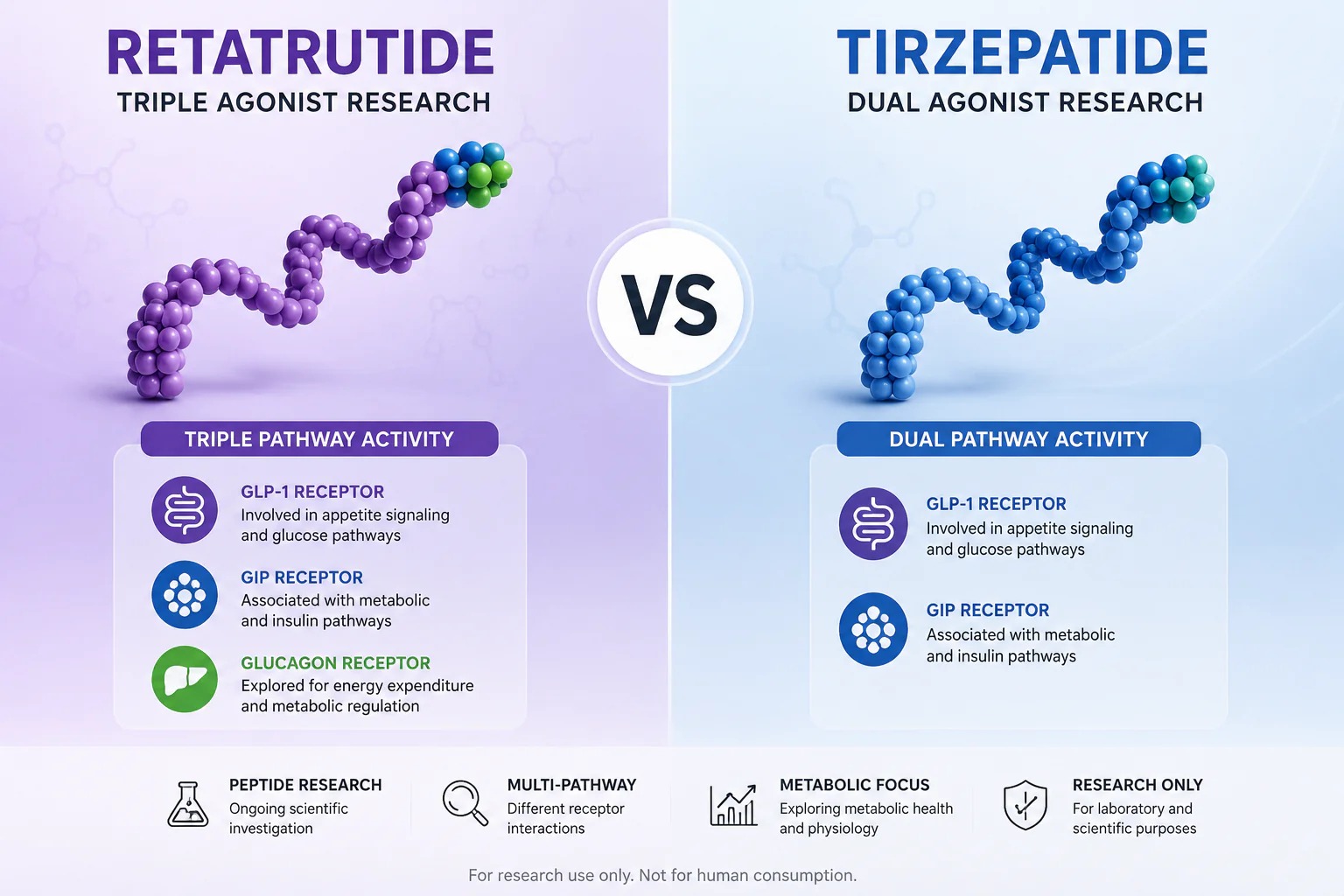
The primary distinction in the retatrutide peptide vs tirzepatide comparison is the additional glucagon receptor activation found in retatrutide.
Tirzepatide vs Retatrutide Weight Loss Research
One of the most common discussion topics is retatrutide vs tirzepatide weight loss.
Researchers are investigating whether the triple-receptor activity of retatrutide may produce different outcomes compared with tirzepatide. Some studies suggest that glucagon receptor activation may contribute to increased energy expenditure, although research is ongoing.
It is important to note that individual responses can vary significantly, and direct comparisons are still being evaluated in scientific settings.
No peptide should be viewed as producing guaranteed outcomes.
Tirzepatide vs Retatrutide Side Effects
Another common area of interest is tirzepatide vs retatrutide side effects.
Research involving both compounds has reported gastrointestinal effects that may include:
- Nausea
- Vomiting
- Diarrhea
- Constipation
- Reduced appetite
Because retatrutide activates an additional receptor pathway, researchers continue evaluating whether this influences tolerability profiles compared with tirzepatide.
The safety characteristics of both peptides remain subjects of ongoing study.
Tirzepatide vs Retatrutide Dose Considerations
When discussing tirzepatide vs retatrutide dose, it is important to understand that dosing protocols differ across clinical studies.
Researchers typically use gradual dose-escalation strategies to evaluate:
- Tolerability
- Safety
- Pharmacological response
Dose comparisons are not always directly equivalent because the two peptides have different receptor activity profiles.
Any dosing decisions should be based on approved prescribing information or clinical research protocols where applicable.
Retatrutide Peptide vs Tirzepatide vs Semaglutide
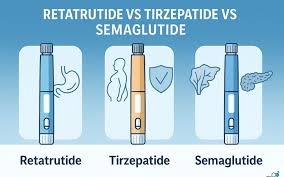
Many readers also compare retatrutide peptide vs tirzepatide vs semaglutide.
Semaglutide
- GLP-1 receptor agonist
- Single-target mechanism
Tirzepatide
- GLP-1 + GIP receptor agonist
- Dual-target mechanism
Retatrutide
- GLP-1 + GIP + Glucagon receptor agonist
- Triple-target mechanism
The progression from single-target to dual-target and triple-target approaches reflects ongoing efforts to understand metabolic regulation pathways better.
Common Areas of Research Interest
Researchers continue exploring these peptides in relation to:
Metabolic Health
Studies examine how receptor activation influences metabolic processes and energy balance.
Appetite Regulation
Scientists investigate how these compounds affect hunger-related signaling pathways.
Body Weight Management
Research continues to evaluate the relationship between peptide signaling and body weight regulation.
Energy Expenditure
Retatrutide’s glucagon receptor activity has generated particular interest regarding energy expenditure mechanisms.
Frequently Asked Questions
Is Retatrutide the Same as Tirzepatide?
No. While both activate GLP-1 and GIP receptors, retatrutide also activates the glucagon receptor, making it a triple agonist rather than a dual agonist.
What Peptide Is Better Than Tirzepatide?
There is no universally “better” peptide. Different compounds have different mechanisms, research objectives, and safety profiles. Scientific evidence continues to evolve.
Can I Switch From Tirzepatide to Retatrutide?
Switching between compounds should only be considered under appropriate medical supervision and according to applicable clinical guidance. Research protocols may vary.
How Fast Does Retatrutide Kick In?
Response timelines observed in research vary between individuals and study designs. Researchers typically evaluate outcomes over weeks or months rather than days.
Which Is Better: Retatrutide vs Tirzepatide?
The answer depends on the specific outcome being studied. Retatrutide offers triple-receptor activity, while tirzepatide offers dual-receptor activity. Ongoing research aims to clarify potential differences.
Does Retatrutide Have More Side Effects Than Tirzepatide?
Researchers continue studying this question. Both peptides have been associated with gastrointestinal side effects in clinical investigations.
Why Is Glucagon Receptor Activation Important?
Scientists believe glucagon receptor activation may influence energy expenditure and metabolic regulation, although research is still ongoing.
Is Retatrutide Approved?
Approval status varies by country and indication. Readers should consult current regulatory information for the most up-to-date status.
Conclusion
The comparison of tirzepatide vs retatrutide centers primarily on their receptor activity profiles. Tirzepatide functions as a dual GLP-1/GIP receptor agonist, while retatrutide adds glucagon receptor activation to create a triple-agonist approach.
Researchers continue investigating how these differences may influence metabolic regulation, appetite signaling, energy expenditure, and body weight outcomes. As scientific understanding evolves, additional studies will help clarify the similarities and distinctions between these peptides.
For readers seeking educational information, understanding the underlying mechanisms provides valuable context for evaluating ongoing research and future developments in the field.
Disclaimer
This article is intended for informational and educational purposes only. It is not medical advice, diagnosis, or treatment guidance. Research involving peptides continues to evolve, and readers should consult qualified healthcare professionals regarding personal medical decisions. References to scientific studies or investigational compounds do not imply safety, efficacy, or regulatory approval for any specific use.