
Description
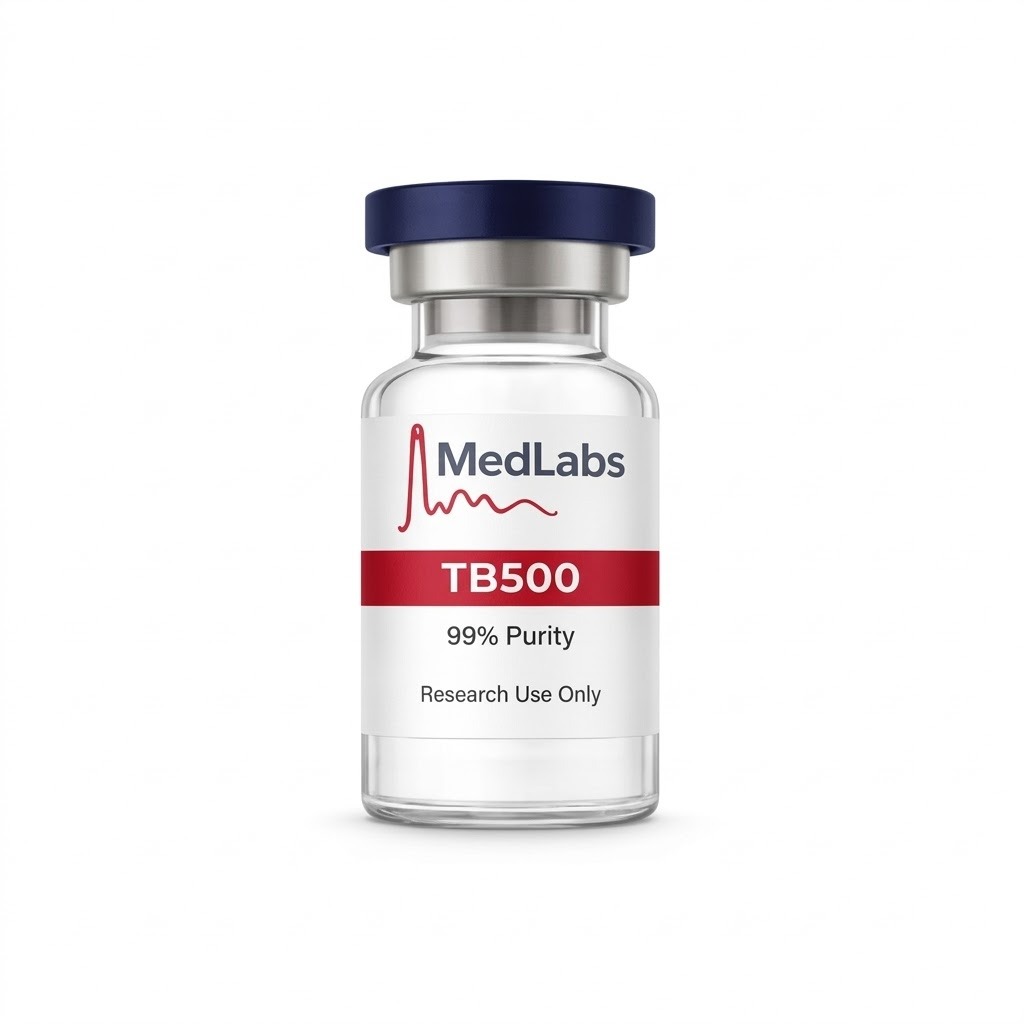
TB500 Peptide – Research-Grade Thymosin Beta 4 Analog for Cellular Regeneration Studies
Quick Specifications
TB 500
- Molecular Formula: C212H350N56O78S
- Molecular Weight: 4963 g/mol
- CAS Number: Not standardized
- Purity: ≥98% (research-grade)
- Appearance: White lyophilized powder
- Storage: -20°C recommended
- Solubility: Water-soluble
- Pack Size: TB500 10mg and custom research quantities
Overview of TB500
TB500 is a synthetic peptide that mimics thymosin beta 4 activity. Therefore, researchers classify it as a regenerative signaling peptide. TB500 peptide contains 43 amino acids and shows strong relevance in cellular migration studies.
This peptide originates from thymic protein expression. Consequently, it plays a role in actin regulation and tissue remodeling. Scientists often ask what TB 500 is when exploring repair and angiogenesis pathways.
Moreover, TB 500 peptide appears in wound fluid and blood platelets. It also demonstrates stability in aqueous solutions. As a result, TB500 bodybuilding and lab research interests continue to grow.
At MedLabs Peptides, TB 500 is supplied strictly for research purposes. Therefore, all experimental use must follow compliance standards.
Mechanism of Action of TB500 Peptide
Actin Binding and Cellular Migration
TB500 peptide interacts with actin proteins inside cells. Specifically, it binds to G-actin and regulates cytoskeletal dynamics. Consequently, this process influences cell migration and structural adaptation.
Researchers studying what TB 500 is used for often focus on this mechanism. Moreover, TB500 peptide supports cellular movement in wound and tissue models. Therefore, it plays a role in regeneration-focused studies.
Signaling Pathways and Angiogenesis
TB500 peptide may activate pathways such as NF-κB and Notch signaling. Additionally, it may influence VEGFA and angiopoietin expression. As a result, it contributes to angiogenesis and vascular formation.
Furthermore, TB500 peptide may regulate microRNA-146a activity. Consequently, it modulates inflammatory signaling through IRAK1 and TRAF6 pathways.
Researchers comparing bpc157 tb500 combinations often examine these pathways. However, tb4 vs tb500 studies focus on structural differences and activity range.
Research Applications of TB500 Peptide
- Cell-based research on actin dynamics and migration
- Animal model studies involving wound healing and angiogenesis
- Receptor binding studies in regenerative signaling pathways
- Comparative peptide research, including bpc157 tb500 models
- Signal transduction studies targeting NF-κB and Notch pathways
Common Research Questions About TB500
What is TB500 used for in research?
Researchers use TB500 peptide to study tissue repair, angiogenesis, and cellular migration.
Does TB500 affect inflammatory pathways?
Yes, TB500 peptide may regulate NF-κB and cytokine signaling pathways.
What is the difference between BPC-157 and TB500?
TB500 targets actin and angiogenesis, while BPC-157 focuses on cytoprotection mechanisms.
How does TB500 affect the heart?
Studies suggest TB500 may influence cardiac cell survival and angiogenesis signaling.
How much TB500 should be injected per week?
Dosage varies depending on research design and experimental protocols.
Handling and Storage Guidelines of TB 500
- Store TB500 peptide at -20°C
- Reconstitute with sterile water or buffer
- Avoid repeated freeze-thaw cycles
- Protect from light exposure
- Use freshly prepared solutions for accuracy
Safety and Compliance of TB 500
This product is FOR RESEARCH USE ONLY.
It is not intended for human or veterinary use.
MedLabs Peptides does not promote therapeutic applications.
Researchers must follow laboratory safety regulations.
All users accept responsibility for proper handling and use.
Reviews
There are no reviews yet.