
Description
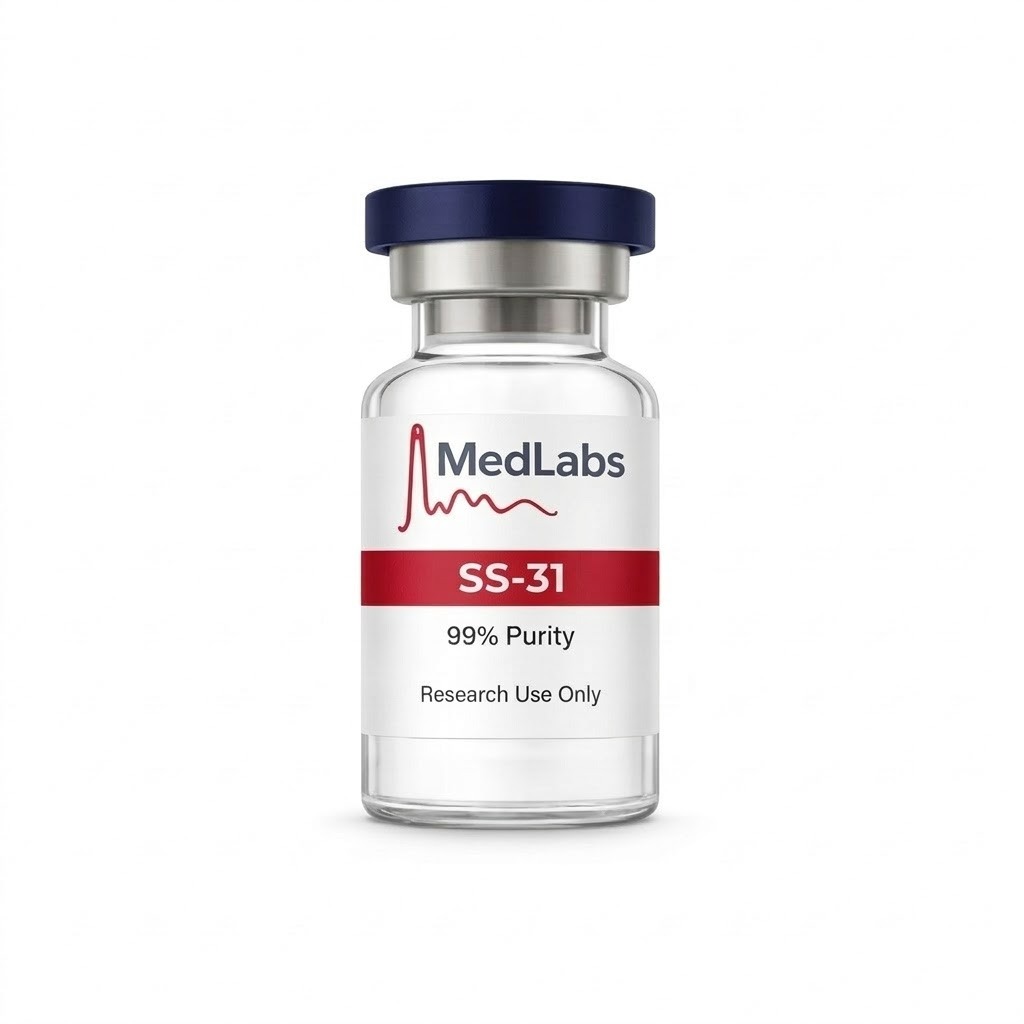
SS-31 Peptide for Mitochondrial & Longevity Research
SS-31 Peptide has emerged as one of the most advanced mitochondrial-targeted research compounds in modern longevity science. Known scientifically as Elamipretide, SS-31 is widely investigated for its potential role in mitochondrial membrane stability, ATP production, oxidative stress regulation, and cellular energy optimization.
At Medlab Peptides, we supply premium research-grade SS-31 Peptide formulated exclusively for laboratory investigation and scientific analysis. As interest in mitochondrial peptides continues to expand, researchers are increasingly studying SS-31 alongside compounds such as MOTS-c, Humanin, NAD+, and Epitalon in advanced anti-aging and metabolic research models.
Its unique mitochondria-targeting design has made SS-31 a leading focus in cellular resilience, endurance metabolism, and bioenergetic research.
What Is SS-31 Peptide?
SS-31 Peptide is a synthetic tetrapeptide developed to selectively target mitochondria — the energy-producing structures inside cells. Unlike conventional antioxidant compounds, SS-31 is designed to penetrate cell membranes and localize directly within the inner mitochondrial membrane.
The peptide is commonly identified by several names in scientific literature, including:
- SS-31
- Elamipretide
- Bendavia
- MTP-131
Researchers continue investigating how SS-31 interacts with cardiolipin, a phospholipid essential for mitochondrial membrane integrity and electron transport chain performance.
Chemical Characteristics
- Peptide Type: Mitochondria-targeted tetrapeptide
- Structure: D-Arg-Dmt-Lys-Phe-NH2
- Research Focus: Mitochondrial bioenergetics and oxidative stress regulation
Because mitochondrial dysfunction is increasingly associated with cellular aging and metabolic decline, SS-31 has become a central compound in longevity-focused research environments.
How SS-31 Peptide Works in Research Models
Targeting Mitochondrial Cardiolipin
One of the defining characteristics of the SS-31 Peptide is its affinity for cardiolipin located within the mitochondrial inner membrane.
Researchers suggest this interaction may help:
- Stabilize mitochondrial membrane structure
- Improve electron transport efficiency
- Reduce oxidative stress signaling
- Support ATP synthesis pathways
- Preserve mitochondrial communication networks
This mechanism differentiates SS-31 from general antioxidant compounds because its activity is concentrated directly at the mitochondrial level.
SS-31 Peptide Benefits in Longevity Research
Enhanced Cellular Energy Production
One of the most discussed ss-31 peptide benefits is its potential role in ATP generation.
Mitochondria are responsible for producing cellular energy through oxidative phosphorylation. Research models indicate that mitochondrial inefficiency may contribute to reduced cellular performance and age-associated metabolic decline.
SS-31 is being studied for its ability to support:
- Electron transport chain efficiency
- Cellular respiration
- ATP production pathways
- Mitochondrial membrane integrity
- Bioenergetic resilience under stress
These characteristics have made SS-31 highly relevant in anti-aging and metabolic science.
Oxidative Stress & Free Radical Research
Reactive oxygen species (ROS) accumulation is widely investigated in aging-related cellular dysfunction.
Researchers are exploring whether SS-31 may help regulate oxidative stress by reducing mitochondrial electron leakage and supporting membrane stability.
Potential investigational areas include:
- Mitochondrial oxidative stress
- Free radical regulation
- Cellular stress adaptation
- Mitochondrial recovery signaling
- Redox balance mechanisms
Because mitochondria naturally generate ROS during ATP production, compounds targeting mitochondrial efficiency continue attracting significant scientific attention.
Mitochondrial Support in Muscle & Performance Studies
Interest in what is the SS-31 peptide for athletes has grown substantially due to its role in cellular energy metabolism.
Preclinical research models continue exploring how mitochondrial-targeted compounds may influence:
- Muscle endurance pathways
- Exercise-related mitochondrial stress
- Skeletal muscle bioenergetics
- Recovery signaling
- Age-associated muscular decline
SS-31 is frequently studied alongside MOTS-c and NAD+ in performance and metabolic adaptation research.
SS-31 Peptide & Cognitive Research
Mitochondria are critical for neurological energy demands. Because neurons require substantial ATP production, mitochondrial dysfunction has become a major research area in cognitive aging studies.
Researchers continue evaluating whether SS-31 may influence:
- Neuronal energy metabolism
- Mitochondrial signaling pathways
- Cellular stress responses in neural tissue
- Oxidative stress regulation in the brain
Scientific interest in mitochondrial-targeted compounds has increased substantially within neuro-metabolic and longevity research sectors.
Cardiovascular & Cellular Resilience Research
Another major area of investigation involves mitochondrial function within cardiac tissue.
The heart requires constant energy production, making mitochondrial integrity especially important in cardiovascular research models.
Studies involving SS-31 are exploring its potential role in:
- Mitochondrial membrane stability
- Cellular oxygen utilization
- Ischemic stress adaptation
- ATP synthesis efficiency
- Cellular recovery signaling
Researchers remain particularly interested in how mitochondrial peptides interact with cardiolipin-rich tissues.
SS-31 Peptide and Healthy Aging Research
Mitochondrial decline is considered one of the hallmarks of biological aging.
Researchers investigating longevity pathways continue exploring how SS-31 may interact with mechanisms linked to:
- Cellular energy preservation
- Mitochondrial maintenance
- Oxidative stress adaptation
- Age-related metabolic efficiency
- Cellular resilience pathways
Its mitochondrial specificity has positioned SS-31 among the most promising investigational compounds in modern longevity science.
SS-31 Peptide Dosage Research Considerations
Search volume surrounding ss-31 peptide dosage continues to increase as interest in mitochondrial compounds expands.
However, dosage protocols remain experimental and vary significantly depending on:
- Research objectives
- Administration models
- Laboratory design
- Study duration
- Compound combinations
At Medlab Peptides, these products are supplied strictly for research and laboratory purposes only.
Not intended for:
- Human consumption
- Medical use
- Diagnostic application
- Therapeutic administration
How Do You Take SS-31 Peptide?
Questions such as “How do you take SS-31 peptide?” are common within peptide research discussions.
In scientific literature, SS-31 has primarily been investigated using:
- Subcutaneous research administration
- Intravenous laboratory models
- Controlled investigational protocols
These methodologies are referenced solely within research contexts and not as consumer usage guidance.
SS-31 Peptide Side Effects in Research Literature
Searches for ss-31 peptide side effects continue increasing as mitochondrial peptide interest grows.
Current literature primarily focuses on preclinical and investigational settings. Researchers continue evaluating:
- Cellular tolerability
- Mitochondrial interactions
- Dose-response relationships
- Bioavailability characteristics
- Long-term investigational outcomes
Further scientific evaluation remains ongoing.
Why Researchers Choose Medlab Peptides
Medlab Peptides is committed to supplying premium research compounds backed by rigorous quality standards and advanced manufacturing protocols.
Our Research-Grade Standards
- High-purity peptide synthesis
- Third-party analytical verification
- Sterile manufacturing conditions
- Secure packaging and storage
- Batch consistency testing
- Research-focused sourcing standards
Researchers worldwide trust Medlab Peptides for premium mitochondrial and longevity compounds designed for advanced scientific investigation.
Related Research Compounds
Researchers interested in the SS-31 Peptide frequently explore complementary compounds, including:
These compounds are commonly studied in mitochondrial, anti-aging, recovery, and metabolic research models.
Frequently Asked Questions About SS-31 Peptide
What are the benefits of SS-31 peptide?
The Peptide is primarily researched for its potential role in mitochondrial support, ATP production, oxidative stress regulation, and cellular energy metabolism.
How do you take SS-31 peptide?
In research settings, it has been investigated through controlled laboratory administration methods, including subcutaneous and intravenous models.
What is the SS-31 peptide for athletes?
Researchers are studying SS-31 in exercise and performance models because of its potential involvement in mitochondrial efficiency and muscle bioenergetics.
Is SS-31 a mitochondrial peptide?
Yes. It is classified as a mitochondria-targeted peptide due to its selective interaction with mitochondrial membranes and cardiolipin.
What are potential SS-31 peptide side effects?
Current literature primarily examines SS-31 in research environments. Ongoing studies continue to evaluate safety profiles, bioavailability, and mitochondrial interactions.
Where can researchers buy SS-31 peptide online?
Researchers seeking premium SS-31 peptide buy online options often prioritize purity, testing standards, and supplier transparency when selecting research compounds.
Explore Premium Research Peptides
Advance your mitochondrial and longevity research with premium compounds from Medlab Peptides.
Shop Research-Grade Compounds
Discover scientifically formulated peptide solutions designed for:
- Cellular energy research
- Longevity investigations
- Mitochondrial studies
- Recovery and metabolic science
Browse Lab-Tested Peptide Formulations
Every product is manufactured with strict quality control standards for advanced research applications.
Upgrade Your Peptide Research Collection
Explore cutting-edge compounds trusted by researchers focused on cellular performance and mitochondrial biology.
Research Use Only Disclaimer
SS-31 Peptide products sold by Medlab Peptides are intended strictly for laboratory research, analytical testing, and scientific investigation purposes only. These products are not intended for human consumption, therapeutic use, medical treatment, or diagnostic application.
Reviews
There are no reviews yet.