
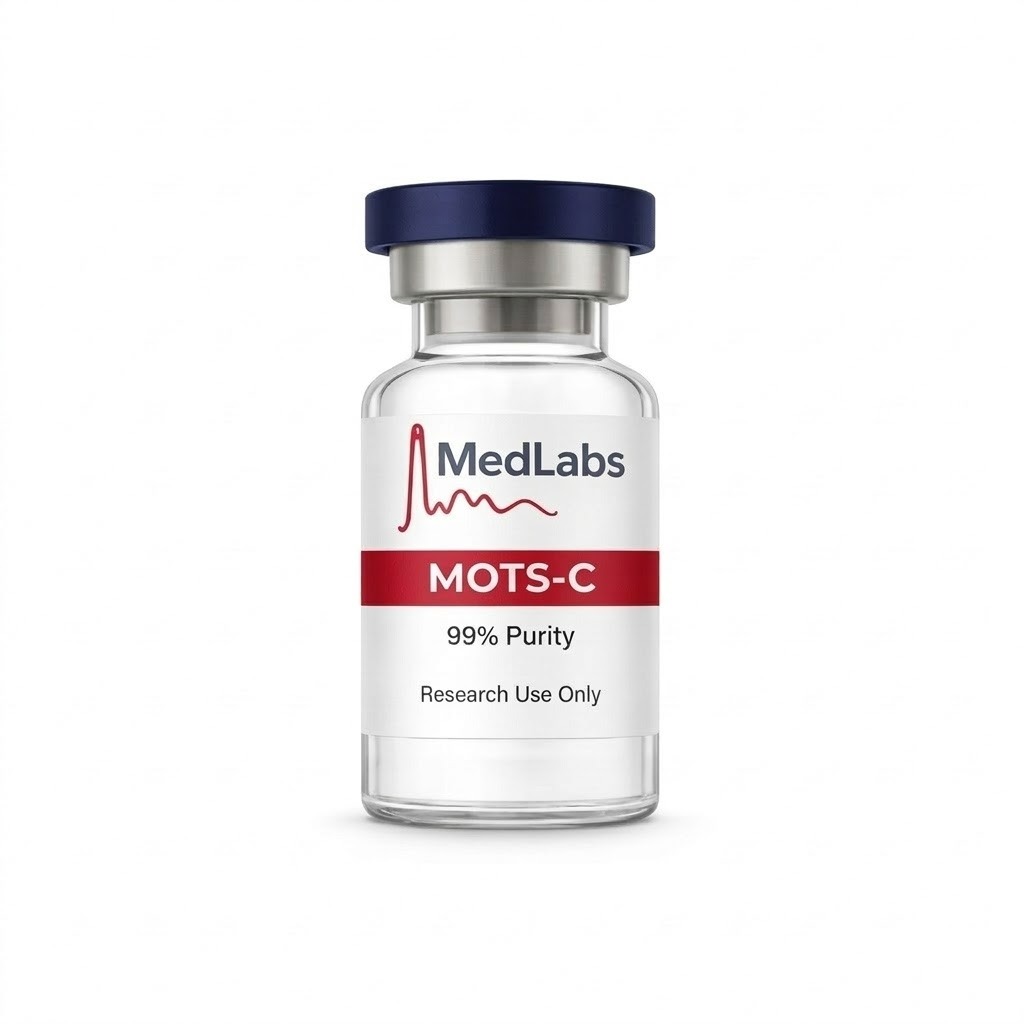
Description
MOTS-C Peptide for Metabolic & Longevity Research
MOTS-C is a mitochondria-derived peptide increasingly studied in the fields of cellular metabolism, mitochondrial signaling, exercise physiology, and longevity science. At Medlab Peptides, our research-grade MOTS-C peptide is manufactured for laboratory and scientific investigation only, supporting advanced peptide research protocols focused on metabolic homeostasis, energy regulation, and age-related cellular pathways.
As interest in mitochondrial peptides continues to expand, MOTS-C has emerged as one of the most discussed compounds in anti-aging and metabolic research. Scientists are particularly interested in its interaction with AMPK signaling, glucose metabolism, mitochondrial communication, and exercise-responsive cellular adaptation. Unlike conventional peptides, MOTS-C originates from mitochondrial DNA, positioning it within a unique class of bioactive signaling compounds known as mitochondrial-derived peptides (MDPs).
What Is MOTS-C?
MOTS-C, short for Mitochondrial Open Reading Frame of the 12S rRNA-c, is a 16-amino-acid peptide encoded within mitochondrial DNA. Researchers classify it as a mitochondrial-derived peptide involved in cellular stress signaling and metabolic regulation.
Unlike many signaling molecules produced in the nucleus, MOTS-C appears to function as a mitokine — a mitochondrial signaling peptide capable of influencing communication between mitochondria and the nucleus during periods of metabolic stress.
Chemical Profile
- Molecular Formula: C101H152N28O22S2
- Molecular Weight: 2174.64 g/mol
- Peptide Class: Mitochondrial-derived peptide (MDP)
- Research Category: Longevity & metabolic signaling peptides
MOTS-C Peptide Research Overview
Current MOTS-C peptide research focuses on how mitochondrial signaling influences metabolic flexibility, exercise adaptation, and cellular aging pathways.
Studies suggest that MOTS-C may activate AMP-activated protein kinase (AMPK), a key cellular energy sensor involved in nutrient balance and metabolic adaptation. Researchers have also explored potential interactions between MOTS-C, NAD+ pathways, sirtuins, oxidative stress responses, and mitochondrial efficiency.
Potential Areas of Research Interest
- Cellular metabolism
- Mitochondrial signaling
- Exercise physiology
- Glucose utilization pathways
- Energy homeostasis
- Skeletal muscle adaptation
- Healthy aging mechanisms
- Oxidative stress response
MOTS-C and Metabolic Research
One of the primary areas of scientific interest surrounding it involves metabolic regulation. Experimental models suggest the peptide may influence glucose uptake and energy utilization through AMPK-related signaling pathways.
Researchers have observed that metabolic stress may trigger the peptide translocation into the nucleus, where it can influence gene expression associated with adaptive cellular responses.
AMPK Activation and Energy Signaling
AMPK acts as a master regulator of cellular energy balance. Research models suggest MOTS-C may contribute to:
- Enhanced metabolic flexibility
- Cellular adaptation to stress
- Improved glucose handling pathways
- Mitochondrial communication signaling
- Regulation of lipid metabolism
Because of these mechanisms, the peptide has become a significant topic in longevity and performance-oriented peptide research.
MOTS-C Peptide and Exercise Performance Research
Emerging studies indicate that endogenous peptide expression may increase during physical activity. Researchers are investigating whether this peptide contributes to exercise adaptation, endurance signaling, and muscle homeostasis.
Areas Being Explored in Research Models
Skeletal Muscle Function
MOTS-C may influence glucose transporter activity and mitochondrial efficiency in muscle tissue.
Cellular Adaptation
Research suggests the peptide may support stress-response signaling during metabolic strain.
Age-Related Physical Decline
Some preclinical studies have examined whether mitochondrial peptides may influence age-associated changes in muscle performance and cellular resilience.
Mitochondrial Communication and Cellular Longevity
Mitochondria are central to cellular energy production and signaling. Scientists studying longevity pathways are increasingly focused on how mitochondrial-derived peptides like MOTS-C and Humanin influence communication between cellular organelles.
Research hypotheses suggest it may participate in:
- Mitonuclear communication
- Cellular stress adaptation
- Oxidative balance signaling
- Longevity-associated metabolic pathways
- Nutrient-sensing mechanisms
Because mitochondrial function is closely tied to aging biology, it also continues to attract attention in advanced anti-aging peptide research.
MOTS-C Peptide and Adipose Tissue Research
Experimental studies have explored how it may influence fat metabolism and systemic energy balance.
Researchers have proposed that it may regulate pathways associated with:
- Lipid utilization
- Insulin signaling
- Glucose transport
- Energy expenditure
- Metabolic homeostasis
These observations have made most C-peptide research particularly relevant in metabolic science and mitochondrial health investigations.
What Is MOTS-C Peptide Used For in Research?
Scientists and laboratory researchers commonly investigate the peptide in studies involving:
- Mitochondrial signaling pathways
- Exercise and endurance adaptation
- Healthy aging models
- Cellular energy metabolism
- Oxidative stress response
- Metabolic flexibility research
- Longevity-focused peptide protocols
Medlab Peptides supplies peptides strictly for research-use-only applications and not for human consumption.
MOTS-C Peptide Dosage Research Information
Search interest surrounding “mots c peptide dosage” continues to grow within research communities. However, there is currently no universally established clinical dosage standard for it.
Published studies vary significantly depending on:
- Experimental design
- Animal model selection
- Route of administration
- Duration of exposure
- Research objectives
For this reason, all MOTS-C peptide dosage considerations remain limited to controlled laboratory and investigational settings.
Related Peptides in Longevity Research
Researchers interested in MOTS-C often explore related mitochondrial and metabolic peptides, including:
These compounds are frequently studied in broader longevity, mitochondrial, and cellular resilience research models.
Why Researchers Choose Medlab Peptides
Research-Grade Quality
Every batch undergoes strict quality-control protocols for purity and consistency.
Advanced Manufacturing Standards
Our peptides are produced using premium laboratory manufacturing processes designed for scientific applications.
Trusted Peptide Supplier
Medlab Peptides is committed to providing reliable research compounds backed by transparent sourcing and scientific integrity.
Research-Use-Only Commitment
All peptide products are intended exclusively for laboratory research and analytical purposes.
Explore Premium Research Peptides
Advance your metabolic and mitochondrial research with premium MOTS-C formulations from Medlab Peptides.
Shop Research-Grade Compounds
Discover high-purity peptide solutions developed for scientific investigation and laboratory excellence.
Browse Lab-Tested Peptide Formulations
Explore advanced longevity and metabolic research peptides designed for precision-focused studies.
Upgrade Your Peptide Research Collection
Build a premium peptide research portfolio with trusted compounds from Medlab Peptides.
Frequently Asked Questions About MOTS-C
What is MOTS-C?
It is a mitochondrial-derived peptide composed of 16 amino acids. Researchers study it for its potential role in metabolism, mitochondrial signaling, exercise adaptation, and longevity pathways.
What does MOTS-C do?
Research suggests it may influence AMPK signaling, cellular stress responses, glucose metabolism, and mitochondrial communication during metabolic stress.
What is MOTS-C peptide used for?
Scientists commonly investigate it in metabolic, mitochondrial, exercise physiology, and healthy aging research models.
Quels sont les bienfaits du peptide MOTS-c ?
Les recherches suggèrent que le peptide MOTS-c pourrait être impliqué dans la régulation du métabolisme cellulaire, la signalisation mitochondriale et les mécanismes liés au vieillissement cellulaire. Ces applications restent limitées à la recherche scientifique.
Qu’est-ce que le peptide MOTS-c 10 mg ?
“MOTS-c 10 mg” generally refers to a research vial containing 10 milligrams of the peptide for laboratory investigation and analytical applications.
Is MOTS-C related to mitochondrial health?
Yes. It is encoded within mitochondrial DNA and is primarily studied for its role in mitochondrial communication and metabolic regulation.
Is MOTS-C available for human use?
No. It’s sold by Medlab Peptides is strictly intended for research-use-only and not for human consumption or therapeutic use
Research Use Disclaimer
The peptide products available through Medlab Peptides are intended strictly for laboratory research, analytical, and investigational purposes only. These compounds are not approved for human or veterinary use.



Reviews
There are no reviews yet.