
Description
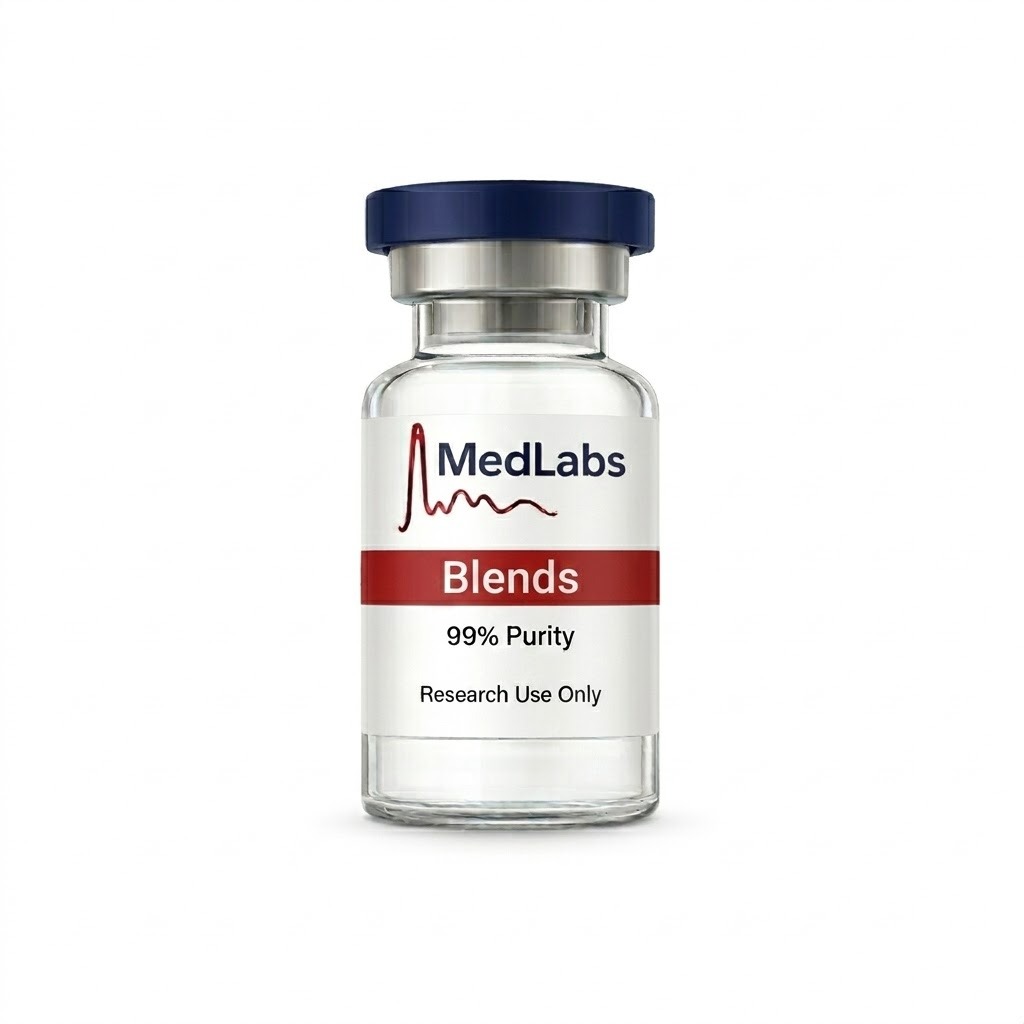
Sermorelin & GHRP-6 Blend
Sermorelin and GHRP-6 are synthetic peptides studied for their ability to influence growth hormone (GH) release through distinct but complementary receptor pathways in the pituitary gland.
Sermorelin is a 29–amino acid fragment representing the active N-terminal portion of endogenous growth hormone-releasing hormone (GHRH). It is considered a functional GHRH analog and contains a C-terminal amidation that may improve stability. Research by Clark et al. indicates that Sermorelin retains strong affinity for GHRH receptors on anterior pituitary somatotrophs, where activation is associated with intracellular signaling that promotes GH synthesis and secretion.
GHRP-6 (growth hormone-releasing peptide-6), by contrast, is a synthetic hexapeptide derived from earlier growth hormone secretagogues and structurally related to modified enkephalin peptides. As described by Bowers et al., it is engineered to minimize opioid receptor activity while preferentially activating ghrelin-sensitive receptors (GHS-R1a), which also regulate GH release. These receptors represent a separate pathway from GHRH signaling but ultimately converge on the same GH-producing pituitary cells.
Because Sermorelin and GHRP-6 act through different receptor systems that both regulate somatotroph activity, researchers propose that their combined use in experimental settings may produce enhanced or more finely tuned GH stimulation compared to either compound alone.
Chemical Information
Alternative names
- Sermorelin: GRF 1-29 NH₂
- GHRP-6: SKF-110679, growth hormone-releasing hexapeptide
Molecular formula
- Sermorelin: C149H246N44O42S
- GHRP-6: C46H56N12O6
Research and Mechanisms
Receptor activity and signaling pathways
Sermorelin acts primarily through GHRH receptors on pituitary cells. As described by Culhane et al., this receptor system is G-protein–coupled and activates adenylate cyclase, increasing cyclic AMP (cAMP) and stimulating protein kinase A (PKA). This signaling cascade promotes movement and release of GH-containing vesicles and supports GH synthesis.
GHRP-6 instead binds to GHS-R1a (ghrelin receptors), also G-protein–coupled. According to Yin et al., activation of this receptor stimulates phospholipase C (PLC), which generates IP₃ and DAG. IP₃ increases intracellular calcium release, while DAG activates protein kinase C (PKC). Together, elevated calcium and PKC signaling facilitate exocytosis of GH-containing granules from pituitary cells.
Effects on growth hormone release
Experimental data suggest Sermorelin can increase both GH secretion and synthesis capacity. Vittone et al. reported that 12-hour mean GH levels approximately doubled following exposure, along with a similar rise in integrated GH output. However, pulse frequency and systemic IGF-1 levels showed minimal change in some measurements.
Khorram et al. found that Sermorelin’s most pronounced effect occurs within the first two hours of administration, with GH output increasing several-fold and modest elevations in IGF-1 observed in some experimental contexts.
For GHRP-6, studies such as those by Bowers et al. indicate a strong stimulatory effect on GH secretion, producing large increases in GH release over 24-hour exposure periods and associated rises in IGF-1 levels. This pattern is consistent with sustained activation of GHS-R1a-mediated signaling and pulsatile GH release.
Synergistic potential
Research suggests that combining GHRP-6 with GHRH analogs can produce greater GH secretion than either pathway alone. Studies by Micic et al. and Cordido et al. demonstrate that dual stimulation of GHRH and GHS receptors leads to amplified GH pulses and increased integrated secretion compared to single-agent exposure.
Even though some experiments used GHRH analogs other than Sermorelin, the shared mechanism supports the hypothesis that Sermorelin combined with GHRP-6 may similarly enhance pituitary output in experimental systems.
A limited study by Sigalos et al. involving Sermorelin with GHRP compounds also reported increases in IGF-1 levels compared with baseline, suggesting potential additive or synergistic effects, though further controlled research is needed to confirm this interaction.
This combination is described for research and laboratory use only.
Reviews
There are no reviews yet.