
Description
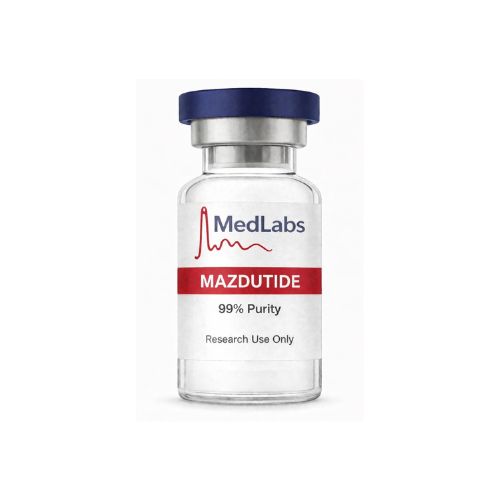
Mazdutide Peptide — MedLabs Peptides
⚠️ For Laboratory Use Only: This product, mazdutide peptide, is intended strictly for controlled research and analytical purposes.
What Is Mazdutide?
The mazdutide peptide — also known by its other name, IBI362 — is a once-weekly dual receptor agonist developed through a collaboration between Innovent Biologics and Eli Lilly. It targets both the GLP-1 receptor and the glucagon receptor (GCGR) simultaneously, giving it a broader metabolic reach than single-receptor compounds.
So, what is mazdutide used for? Researchers study it primarily for two major conditions — obesity and type 2 diabetes. Its dual-action design helps reduce body weight significantly while also improving glycemic control.
This makes the mazdutide peptide one of the most exciting compounds in current metabolic research.
Is Mazdutide a GLP-1 Agonist?
Yes — and it goes further than that. The mazdutide peptide activates both the GLP-1 receptor and the glucagon receptor (GCGR). This dual activation sets it apart from standard GLP-1 agonists like semaglutide or liraglutide.
By targeting glucagon receptors alongside GLP-1 receptors, mazdutide drives stronger fat burning, better energy expenditure, and more robust weight reduction. Researchers classify it as a GLP-1R/GCGR dual agonist — a next-generation approach to metabolic therapy.
What Is the Other Name for Mazdutide?
Mazdutide carries the research designation IBI362. You may encounter both names across clinical literature and research databases. At MedLabs Peptides, we supply this compound under its widely recognized name — mazdutide — for easy identification across research applications.
How the Mazdutide Peptide Works
The mazdutide peptide delivers its effects through two simultaneous pathways:
- GLP-1 Receptor Activation — Stimulates insulin secretion, suppresses glucagon release, slows gastric emptying, and reduces appetite.
- Glucagon Receptor Activation — Boosts energy expenditure and accelerates fat breakdown, amplifying the overall weight loss effect.
Together, these two pathways create a powerful and well-studied metabolic response. Researchers find this dual mechanism particularly valuable for studying obesity with concurrent metabolic complications.
Mazdutide Clinical Trial Results
The mazdutide peptide has generated impressive data across multiple clinical trials, particularly in Chinese adult populations. Here are the key highlights:
GLORY-2 Study
The 9 mg dose of mazdutide produced up to 20.1% body weight reduction in Chinese adults living with obesity. This result places mazdutide among the highest-performing weight loss compounds in current research.
Type 2 Diabetes Study
At the 6 mg dose, mazdutide delivered effective weight reduction and meaningful HbA1c improvements in Chinese patients managing type 2 diabetes. Results consistently outperformed placebo across all measured endpoints.
Phase 1b Safety Study
Early-phase research confirmed that the mazdutide peptide is well-tolerated. Researchers recorded no serious adverse events, building a strong safety foundation for ongoing Phase 3 investigations.
What Is Mazdutide Used For? — Key Research Benefits
MedLabs Peptides supplies mazdutide to support research across several critical areas:
Weight Loss Efficacy
Studies show that 24-week mazdutide treatment protocols produce weight reductions exceeding 10% of body weight in a large proportion of participants. This makes it a top-tier compound for obesity research.
Glycemic Control
The mazdutide peptide actively lowers HbA1c levels — a key marker of long-term blood sugar regulation. Researchers studying type 2 diabetes find this benefit particularly valuable.
Cardiovascular Benefits
Beyond weight and glucose, clinical data link mazdutide to measurable cardiovascular improvements. This positions the compound as a multi-benefit research tool for cardiometabolic studies.
What Is Mazdutide for Men?
Research on mazdutide for men focuses on reducing visceral fat — the deep abdominal fat strongly associated with cardiovascular disease and insulin resistance. Men in clinical studies show strong responses in body composition metrics, making mazdutide highly relevant to male metabolic health research.
Mazdutide vs Tirzepatide — How Do They Compare?
Both compounds target GLP-1 receptors, but they differ in their secondary targets:
| Feature | Mazdutide (IBI362) | Tirzepatide |
|---|---|---|
| Primary Target | GLP-1R + GCGR | GLP-1R + GIPR |
| Developer | Innovent / Eli Lilly | Eli Lilly |
| Dosing Frequency | Once weekly | Once weekly |
| Weight Loss (Peak) | Up to 20.1% | Up to 22.5% |
| Key Population Studied | Chinese adults | Global populations |
Mazdutide vs tirzepatide comes down to receptor targeting — mazdutide activates glucagon receptors while tirzepatide activates GIP receptors. Each pathway drives weight loss through slightly different mechanisms, making both compounds valuable in comparative metabolic research.
Mazdutide vs Retatrutide — Triple vs Dual Agonist
Mazdutide vs retatrutide represents a key research comparison. Retatrutide targets three receptors — GLP-1R, GIPR, and GCGR — making it a triple agonist. Mazdutide targets two — GLP-1R and GCGR.
Retatrutide produces slightly higher peak weight loss in early studies. However, mazdutide’s dual-agonist profile offers a cleaner mechanism for researchers seeking to isolate the specific contributions of GLP-1 and glucagon receptor activation.
Side Effects — What Researchers Observe
The mazdutide peptide produces a mild-to-moderate side effect profile, consistent with other GLP-1-based compounds. Researchers document the following most frequently:
| Side Effect | Severity |
|---|---|
| Nausea | Mild to Moderate |
| Diarrhea | Mild to Moderate |
| Vomiting | Mild to Moderate |
| Decreased Appetite | Mild |
Importantly, these effects typically appear early in the dosing schedule and reduce over time. Researchers also note that mazdutide may influence the absorption of oral medications taken concurrently, due to its gastric-emptying effects.
Mazdutide Pricing & Regulatory Status
Mazdutide does not yet carry an official commercial price, as it remains in clinical trial stages. Currently, China’s National Medical Products Administration (NMPA) evaluates the 9 mg dosage for regulatory approval.
Researchers and institutions looking to buy mazdutide for laboratory use can source a research-grade supply directly through MedLabs Peptides.
Where to Buy Mazdutide
MedLabs Peptides provides researchers with reliable access to the mazdutide peptide in research-grade form. Every vial meets strict quality and purity standards to support consistent, reproducible research outcomes.
When you choose MedLabs Peptides as your mazdutide supplier, you get:
- Research-grade purity
- Sterile, sealed vials
- Consistent batch quality
- Dependable supply for long-term studies
Storage & Handling of Mazdutide Peptide
Proper storage protects the integrity of the mazdutide peptide. Follow these guidelines:
- Temperature: -20°C to 4°C (4°F to 39°F)
- Environment: Dry conditions, away from direct sunlight and heat
- Handling: Follow all standard sterile laboratory protocols for peptide compounds
Research Applications at MedLabs Peptides
MedLabs Peptides supplies the mazdutide peptide to support investigation across these key research areas:
- Obesity and excess body fat reduction studies
- Type 2 diabetes and HbA1c regulation research
- Dual GLP-1R/GCGR agonist mechanism studies
- Cardiovascular risk reduction in metabolic disease
- Comparative studies against tirzepatide and retatrutide
Reviews
There are no reviews yet.