
Description
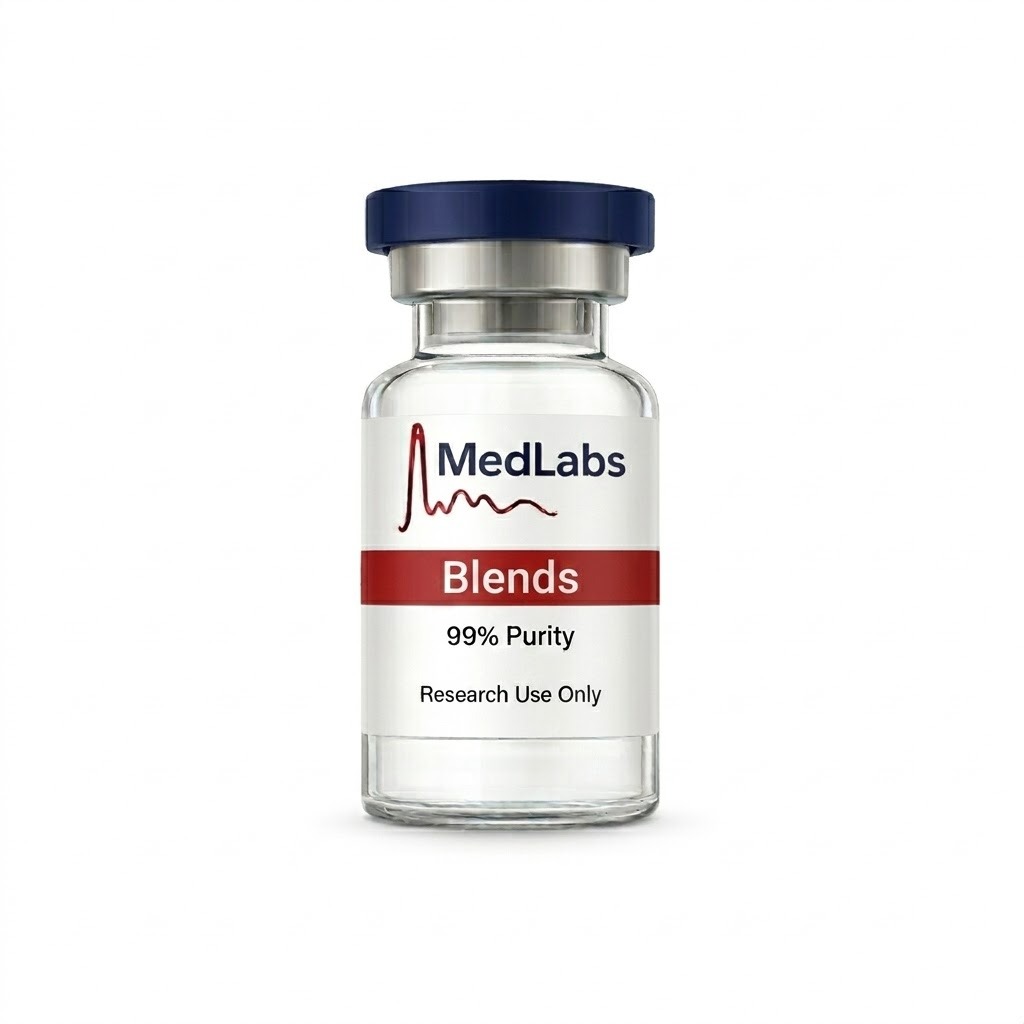
CJC-1295 & GHRP-2 Peptide Blend
Research suggests that CJC-1295 and GHRP-2 may stimulate growth hormone (GH) release through distinct receptor pathways, potentially producing a combined effect on the anterior pituitary that enhances overall GH secretion.
CJC-1295 is a synthetic analog derived from the first 29 amino acids of growth hormone–releasing hormone (GHRH). It is engineered with multiple amino acid substitutions and is often linked to a drug affinity complex (DAC), which allows it to bind plasma proteins and extend its circulation time. This modification is believed to improve its stability and prolong its activity in the body.(1)
GHRP-2 (Growth Hormone Releasing Peptide-2) is a synthetic hexapeptide composed of six amino acids. It is reported to bind to the ghrelin receptor, also known as the growth hormone secretagogue receptor (GHS-R1a), which is found in both the hypothalamus and pituitary gland. Through this interaction, GHRP-2 is thought to stimulate growth hormone release from cells expressing this receptor.(2)
Because these peptides act on different receptors and signaling pathways, they are considered by researchers to potentially work synergistically, leading to greater growth hormone release than either compound alone.
Chemical Composition(3)(4)
Molecular Formulas
- CJC-1295: C152H252N44O42
- GHRP-2: C45H55N9O6
Molecular Weights
- CJC-1295: 3367.9 g/mol
- GHRP-2: 817.9 g/mol
Amino Acid Sequences
- CJC-1295: a modified 29–amino acid GHRH fragment with multiple substitutions and amidation
- GHRP-2: D-Ala–(2-naphthyl)-D-Ala–Ala–Trp–D-Phe–Lys–NH₂
Alternative Names
- CJC-1295: GHRH (1-29) analog; albumin-conjugated GHRH derivative
- GHRP-2: Pralmorelin; GPA-748
Research Overview
Growth Hormone Secretion
Studies indicate that GHRP-2 may strongly activate GHS-R1a receptors in the hypothalamus and pituitary, while CJC-1295 primarily stimulates the GHRH receptor in the pituitary gland. This dual receptor activation is associated with increased circulating growth hormone levels.
Evidence suggests that the combination may elevate plasma GH concentrations more than either peptide alone, with some reports describing a substantial rise in overall GH output, including marked increases in basal secretion and pulsatile release.(1)
Although they act through different mechanisms, their combined use is thought to preserve natural pulsatile GH release patterns, potentially reducing excessive hormone spikes due to feedback regulation.(5)
Research comparing the two pathways suggests that GHRP-2 may produce a stronger and faster peak GH response, while GHRH-based analogs like CJC-1295 tend to produce a more sustained effect. When combined, they have been observed in some models to significantly amplify pulsatile GH secretion compared to baseline.(6)
Metabolism, Fat, and Muscle Effects
Both peptides are believed to increase growth hormone levels, which may contribute to enhanced fat metabolism through lipolysis and increased fatty acid utilization for energy. CJC-1295 is noted for its prolonged activity due to its extended half-life compared to natural GHRH.
Growth hormone is associated with increased fat oxidation and altered glucose metabolism. GHRP-2, due to its ghrelin-like properties, may also influence energy balance and feeding behavior. Research suggests it may act as a metabolic signal that links nutritional status with growth hormone regulation.(7)
However, GHRP-2 is also associated with appetite stimulation. This effect is thought to occur through activation of GHS-R1a receptors in the hypothalamus, which may increase orexigenic neuropeptides such as NPY and AgRP while reducing anorexigenic signaling like α-MSH. It may also interact with reward pathways involved in food motivation.
Because of this, GHRP-2 may increase caloric intake in some cases, which could offset fat-loss effects associated with increased GH activity. Despite this, the combination of CJC-1295 and GHRP-2 is still often discussed in terms of potential anabolic effects, particularly related to lean mass development and IGF-1 signaling.
IGF-1 Pathway Activation
Increased growth hormone from CJC-1295 and GHRP-2 may stimulate liver receptors, triggering intracellular signaling pathways such as JAK-STAT. This cascade leads to activation of genes involved in insulin-like growth factor-1 (IGF-1) production.
IGF-1 is considered a key mediator of growth hormone’s anabolic effects, supporting cellular growth, tissue repair, and protein synthesis.
Research suggests that CJC-1295 can significantly elevate GH levels within hours of administration and may maintain increased levels for several days. IGF-1 levels have also been observed to rise in a dose-dependent manner and may remain elevated for extended periods following repeated exposure, with potential cumulative effects over time.(8)
Note: This peptide combination is generally described as intended for research and laboratory use only.
Reviews
There are no reviews yet.