

GLP-1 vs GIP: Understanding the Differences Between Two Key Metabolic Hormones
INTRODUCTION
The discussion around GLP-1 vs GIP has become increasingly important as researchers continue investigating the complex biological pathways involved in metabolism, energy regulation, and hormone signaling. While both hormones belong to a group known as incretins, they perform distinct functions and interact with different receptors throughout the body.
As interest in metabolic peptide research grows, common questions include: Is GLP-1 the same as GIP?, Is GIP or GLP-1 better for weight loss?, and Is GLP-1 plus a GIP tirzepatide? Understanding how these hormones function individually—and together—can help provide context for current scientific research.
This article explores the similarities and differences between GLP-1 and GIP, their receptor mechanisms, and how researchers are studying their combined effects in modern peptide science.
WHAT IT IS
What Is GLP-1?
GLP-1 (Glucagon-Like Peptide-1) is an incretin hormone produced primarily in the intestine after food intake. It plays a role in signaling pathways related to nutrient sensing and metabolic regulation.
What Is GIP?
GIP (Glucose-Dependent Insulinotropic Polypeptide) is another incretin hormone released by specialized intestinal cells following nutrient consumption. Like GLP-1, it participates in metabolic communication between the digestive system and other tissues.
Is GLP-1 the Same as GIP?
No. Although both hormones belong to the incretin family and share certain physiological functions, they are separate signaling molecules that interact with different receptors and activate distinct biological pathways.
Researchers often compare GLP-1 vs GIP effects to better understand how each hormone contributes to metabolic regulation.
HOW IT WORKS
GLP-1 Receptor Signaling
GLP-1 works by binding to the GLP-1 receptor (GLP-1R), which is found in various tissues including the pancreas, gastrointestinal tract, nervous system, and cardiovascular system.
Activation of the receptor initiates intracellular signaling pathways involving:
- Cyclic AMP (cAMP)
- Hormonal communication
- Glucose-related signaling
- Appetite-associated pathways
GIP Receptor Signaling
GIP binds to the GIP receptor (GIPR), another G protein-coupled receptor involved in metabolic regulation.
Researchers study GIP signaling because it may influence:
- Nutrient processing
- Hormonal responses
- Energy balance pathways
- Metabolic communication
GLP-1 vs GIP Receptor Agonist Research
Modern peptide research increasingly focuses on compounds that activate one or both receptor systems.
Researchers compare:
- GLP-1 receptor agonists
- GIP receptor agonists
- Dual receptor agonists
This area has become especially important with the emergence of molecules that target multiple metabolic pathways simultaneously.
KEY INSIGHTS / RESEARCH OVERVIEW
Why Researchers Compare GLP-1 and GIP
Both hormones are released after eating and contribute to metabolic signaling. However, they differ in receptor distribution, signaling strength, and physiological effects.
Current research aims to understand:
- How each hormone affects metabolic regulation
- Receptor-specific signaling patterns
- Potential benefits of dual receptor activation
- Long-term adaptations in hormone pathways
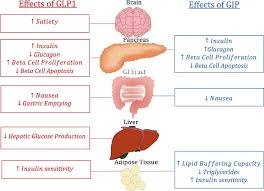
GLP-1 vs GIP and Glucagon
Researchers also investigate how GLP-1 and GIP interact with glucagon-related pathways.
- GLP-1
- GIP
- Glucagon signaling networks
Understanding these interactions may help clarify broader metabolic mechanisms.
Dual Agonist Research
Recent scientific attention has focused on compounds that activate both GLP-1 and GIP receptors simultaneously.
These studies seek to determine whether combined receptor activation produces different signaling responses compared with targeting either receptor alone.
COMPARISON SECTION
GLP-1 vs GIP Comparison Table
| Feature | GLP-1 | GIP |
|---|---|---|
| Full Name | Glucagon-Like Peptide-1 | Glucose-Dependent Insulinotropic Polypeptide |
| Hormone Type | Incretin | Incretin |
| Primary Receptor | GLP-1R | GIPR |
| Source | Intestinal L Cells | Intestinal K Cells |
| Research Focus | Metabolic signaling, appetite pathways | Nutrient sensing, metabolic regulation |
| Receptor Distribution | Multiple tissues | Multiple tissues |
| Frequently Studied With | Semaglutide, Liraglutide | GIP analogs |
| Dual Target Research | Often combined with GIP | Often combined with GLP-1 |
GLP-1 vs GIP vs Tirzepatide
One frequently searched topic is GLP-1GIP vs tirzepatide.
Tirzepatide differs because it acts as a dual receptor agonist, targeting both:
- GLP-1 receptors
- GIP receptors
For this reason, researchers often describe tirzepatide as a compound that combines aspects of GLP-1 and GIP signaling into a single molecule.
Is GLP-1 Plus a GIP Tirzepatide?
Tirzepatide is designed to activate both receptor systems. However, it is not simply a combination of two separate hormones.
E-COMMERCE CONTEXT
Researchers investigating incretin biology may encounter compounds designed to target GLP-1 receptors, GIP receptors, or both. Such peptides may be available from suppliers specializing in research-use materials.
When evaluating research compounds, researchers commonly review:
- Purity specifications
- Third-party testing documentation
- Certificate of Analysis availability
- Storage recommendations
- Product handling guidelines
Educational information can help researchers better understand peptide classifications and receptor-specific terminology.
FAQ SECTION
Is GIP or GLP-1 better for weight loss?
Current research investigates both hormones extensively. Because the biological pathways are complex, researchers generally avoid concluding that one hormone is universally “better.” Outcomes depend on study design, compound characteristics, and the specific research question being examined.
Is GLP-1 the same as GIP?
No. They are distinct incretin hormones that activate different receptors and participate in different signaling pathways.
Is GLP-1 plus a GIP tirzepatide?
Tirzepatide is a dual receptor agonist designed to activate both GLP-1 and GIP receptors within a single molecule.
How to activate GIP and GLP-1 hormones naturally?
Both hormones are naturally released in response to food intake. Researchers continue studying how nutrient composition and meal timing may influence incretin hormone secretion.
What are GLP-1 vs GIP effects?
Both hormones contribute to metabolic signaling, but they interact with distinct receptors and may influence physiological pathways in different ways.
What is GLP-1 used for in research?
Researchers study GLP-1 signaling to better understand metabolic communication, receptor activation, and incretin biology.
What does current research suggest about dual agonists?
Current studies continue exploring whether simultaneous activation of GLP-1 and GIP receptors produces different signaling responses than activation of either receptor alone.
Is tirzepatide experimental or approved?
Depending on regulatory jurisdiction, tirzepatide may have approved uses in certain contexts, while ongoing research continues to investigate additional aspects of its biology and receptor activity.
CONCLUSION
The comparison of GLP-1 vs GIP highlights the complexity of incretin hormone signaling and metabolic regulation. Although both hormones belong to the same family, they interact with different receptors and contribute to distinct physiological pathways.
As research continues to advance, scientists remain interested in understanding how GLP-1, GIP, and dual receptor agonists such as tirzepatide influence cellular communication and metabolic processes. These investigations continue to expand our understanding of peptide-based signaling systems.
DISCLAIMER
This content is provided for educational and informational purposes only. It is not intended as medical advice, diagnosis, treatment, or healthcare guidance. Readers should consult qualified professionals regarding medical, scientific, legal, or regulatory matters.