
Description
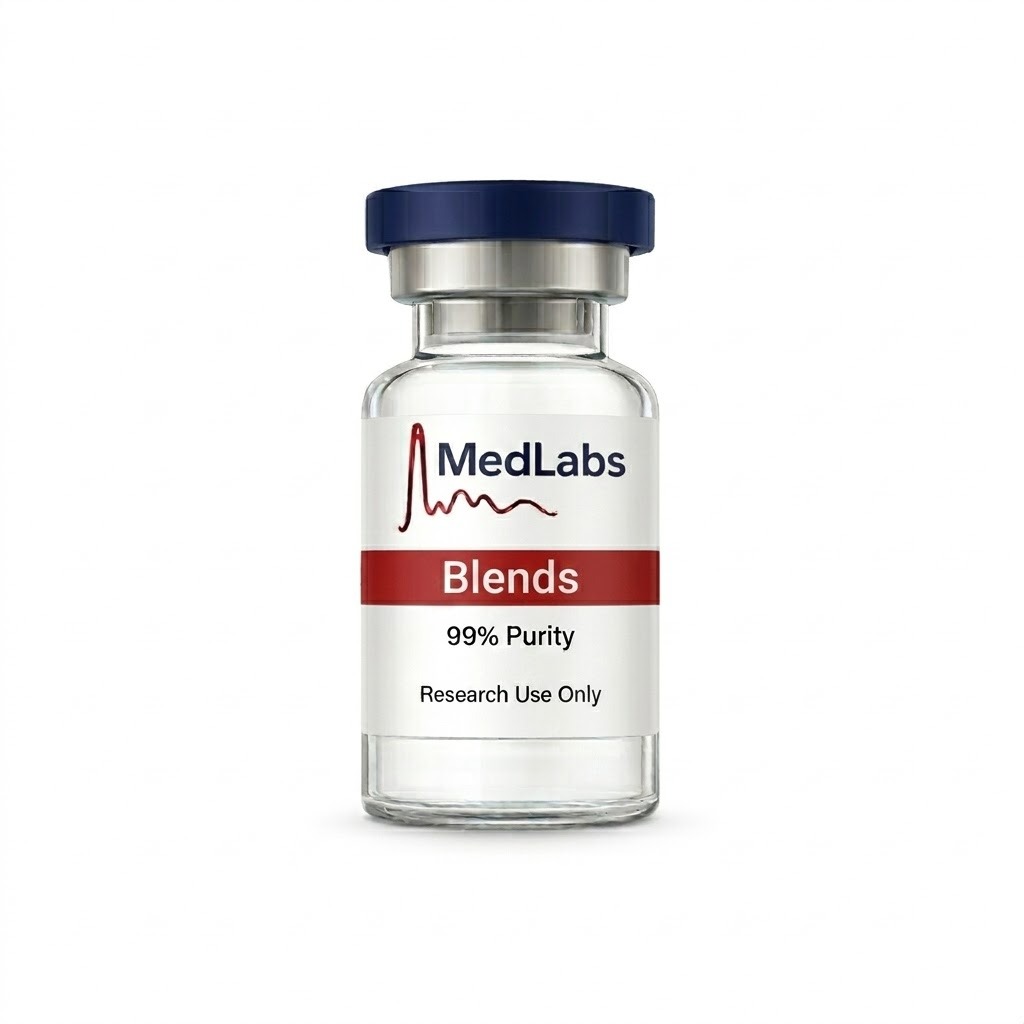
Sermorelin & Ipamorelin Blend
Sermorelin and Ipamorelin are synthetic peptides studied for their potential to increase growth hormone (GH) secretion. When used together, they are believed to work in a complementary manner, potentially enhancing overall stimulation of the pituitary gland and supporting higher GH output. Growth hormone is widely recognized for its role in regulating metabolism, growth, and body composition.
Overview
Sermorelin is a 29–amino acid synthetic analog of growth hormone-releasing hormone (GHRH). It is also known as GRF (1-29) and serves as a shortened version of the natural 44–amino–acid GHRH peptide. It is designed to mimic GHRH activity by binding to receptors on pituitary somatotroph cells, potentially triggering growth hormone release. It has been studied since the early 1980s under the name GHRF (1-29) amide.
Ipamorelin is a synthetic pentapeptide composed of five amino acids and is classified as a growth hormone secretagogue (GHS). It is considered one of the more selective compounds in its class, primarily stimulating growth hormone release while showing minimal influence on other pituitary hormones such as ACTH or prolactin.
Both peptides are thought to act on the anterior pituitary but through different biological pathways. Sermorelin works through GHRH receptor activation, while Ipamorelin acts through ghrelin receptor (GHS-R1a) stimulation. Because of these distinct mechanisms, they are often described as potentially complementary when used together.
A key difference between them is duration of action: Sermorelin has a short half-life of roughly 11–12 minutes, whereas Ipamorelin is reported to have a longer duration of action of about 2 hours. This has led to the suggestion that Sermorelin may produce a more immediate GH pulse, while Ipamorelin may help extend GH release over time.
Chemical Information
- Sermorelin: C149H246N44O42S; ~3357.93 g/mol
- Ipamorelin: C38H49N9O5; ~771.86 g/mol
Alternative names include GRF (1-29) for Sermorelin and NNC 26-0161 for Ipamorelin.
Research Overview
Growth hormone effects
Both peptides have been individually investigated for their ability to increase growth hormone and downstream IGF-1 production. Sermorelin has been associated in studies with significant increases in GH levels lasting for short periods, while longer-term administration has been linked to modest increases in IGF-1.
Ipamorelin has also been shown in research to elevate GH levels substantially compared to baseline or placebo conditions. Some studies suggest pronounced increases in pulsatile GH secretion when compared to control groups.
Body composition and lean mass
Sermorelin has been associated with increases in lean body mass without major changes in fat mass in some studies, likely due to its influence on GH and IGF-1 signaling pathways.
Ipamorelin, on the other hand, has been linked in animal and limited human research to increases in body weight and lean mass, although some of this effect may be related to increased appetite and food intake mediated by ghrelin receptor activity.
Some studies suggest increases in fat mass alongside weight gain in Ipamorelin groups, potentially reflecting changes in energy intake rather than direct anabolic effects.
Bone density and metabolism
Research involving Ipamorelin suggests possible increases in bone mineral content and density in animal models. Measurements using imaging techniques such as DEXA and pQCT have shown potential changes in bone structure, including increased cortical bone mass and cross-sectional area.
Mechanistic differences
Sermorelin primarily acts by activating GHRH receptors on pituitary cells, initiating intracellular signaling cascades (including cAMP and protein kinase A pathways) that ultimately promote GH release.
Ipamorelin binds to ghrelin receptors (GHS-R1a), activating G-protein signaling pathways that increase intracellular calcium levels, which also contributes to GH secretion.
Because these pathways are distinct, their combined use is theorized to produce a stronger or more sustained GH response than either compound alone.
Summary
Sermorelin and Ipamorelin are studied as complementary growth hormone–stimulating peptides that act through different receptor systems in the pituitary gland. Sermorelin mimics natural GHRH activity, while Ipamorelin mimics ghrelin signaling. Research on each compound individually suggests potential effects on GH release, IGF-1 levels, body composition, appetite, and bone metabolism, though findings are largely based on experimental or limited clinical data.
Their combination is primarily theoretical in research literature, with the idea that dual-pathway stimulation could enhance overall growth hormone secretion.
Reviews
There are no reviews yet.