
Description
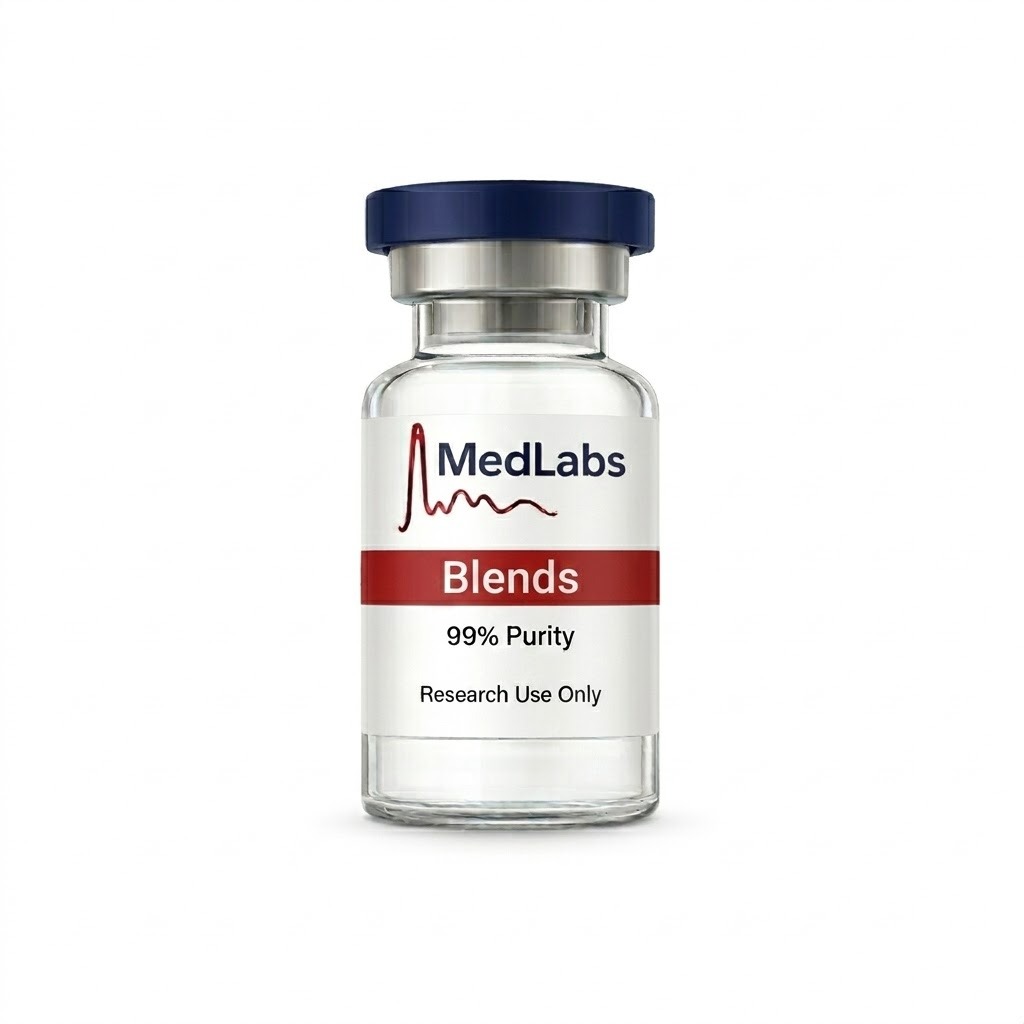
CJC-1295 & Ipamorelin Peptide Blend
Overview
The CJC-1295 & Ipamorelin peptide blend combines two extensively researched growth hormone secretagogues that are commonly investigated for their potential influence on endogenous growth hormone production. While both compounds interact with pathways involved in growth hormone regulation, they do so through different mechanisms, making them a popular combination in research focused on hormone signaling, tissue regeneration, recovery processes, and metabolic function.
Ipamorelin is a synthetic pentapeptide belonging to the growth hormone secretagogue (GHS) family. Researchers have explored its ability to selectively stimulate growth hormone release through activation of growth hormone secretagogue receptors (GHS-R1a), while appearing to have minimal impact on other pituitary hormones.
CJC-1295 is a modified analog of growth hormone-releasing hormone (GHRH) designed to improve stability and extend biological activity. By mimicking the actions of naturally occurring GHRH, CJC-1295 has been studied for its capacity to promote sustained growth hormone signaling and elevate circulating levels of insulin-like growth factor-1 (IGF-1).
Together, these peptides are often examined for their complementary activity profiles, with Ipamorelin providing an initial stimulatory effect and CJC-1295 contributing longer-lasting support for growth hormone release.
How CJC-1295 Works
CJC-1295 is derived from the active portion of natural GHRH and contains several amino acid substitutions intended to improve resistance to enzymatic breakdown. These structural modifications may enhance receptor interaction while extending the peptide’s duration of action.
Researchers suggest that CJC-1295 binds to GHRH receptors located on somatotroph cells within the anterior pituitary gland. Activation of these receptors may initiate intracellular signaling pathways that contribute to growth hormone synthesis and release.
A distinguishing feature of CJC-1295 is its ability to remain active for extended periods compared with native GHRH. Certain versions of the peptide incorporate a Drug Affinity Complex (DAC), which may allow binding to plasma proteins and significantly prolong circulation time.
Studies have reported that this extended activity profile may contribute to sustained increases in growth hormone and IGF-1 concentrations.
How Ipamorelin Works
Ipamorelin, also known as NNC 26-0161, is a highly selective growth hormone secretagogue developed to activate GHS-R1a receptors. These receptors are found primarily within the hypothalamic-pituitary axis and are naturally associated with the hormone ghrelin.
Unlike some earlier growth hormone secretagogues, Ipamorelin appears to selectively promote growth hormone release without substantially stimulating other hormones such as prolactin or cortisol. This selectivity has made it a subject of interest in research involving endocrine regulation and hormone optimization.
When Ipamorelin binds to its receptor, it may activate intracellular signaling pathways involving phospholipase C (PLC), calcium mobilization, and protein kinase activation. These signaling events are believed to contribute to the release of growth hormone from pituitary cells.
Potential Synergy of the Peptide Blend
Researchers have proposed that combining CJC-1295 and Ipamorelin may create a complementary effect on growth hormone secretion. While Ipamorelin may produce a relatively rapid response following administration, CJC-1295 appears to provide a longer-lasting stimulatory influence.
This combination has led scientists to investigate the blend’s potential impact on:
- Growth hormone production
- IGF-1 regulation
- Recovery and regeneration processes
- Lean tissue maintenance
- Cellular repair mechanisms
- Metabolic function
Because the peptides target different receptors and signaling pathways, their combined use may offer advantages over either compound alone in certain experimental settings.
Chemical Information
Molecular Formula
CJC-1295: C152H252N44O42
Ipamorelin: C38H49N9O5
Molecular Weight
CJC-1295: 3367.9 g/mol
Ipamorelin: 711.8 g/mol
Alternative Names
CJC-1295
- Mod GRF 1-29
- CJC-1295 No DAC
- CJC-1295 with DAC
Ipamorelin
- NNC 26-0161
Research Highlights
Pharmacokinetics and Half-Life
Clinical investigations have demonstrated notable differences between the pharmacokinetic profiles of CJC-1295 and Ipamorelin.
Research involving Ipamorelin suggests that the peptide exhibits a relatively short duration of activity, with growth hormone release occurring shortly after administration and declining within a matter of hours.
CJC-1295, in contrast, has been shown to possess a substantially longer half-life. Studies indicate that growth hormone stimulation may persist for several days following a single administration, particularly when the DAC-modified version is used.
These differing activity profiles are one reason the two peptides are frequently examined together in research environments.
Growth Hormone and IGF-1 Research
Several clinical studies have reported significant increases in growth hormone secretion following exposure to CJC-1295. Researchers have also observed corresponding elevations in circulating IGF-1 levels, a key mediator of many growth hormone-related biological processes.
Evidence suggests that CJC-1295 may increase both the frequency and amplitude of natural growth hormone pulses, potentially supporting sustained endocrine activity.
Cellular Signaling and Pituitary Function
Investigations into CJC-1295 have revealed activation of signaling pathways involving cyclic AMP (cAMP), G-proteins, and transcription factors associated with growth hormone production.
Research also suggests that prolonged stimulation of GHRH receptors may influence somatotroph cell activity, potentially supporting cellular maintenance and hormone synthesis within the pituitary gland.
Ipamorelin activates a separate signaling pathway involving GHS-R1a receptors, phospholipase C activation, intracellular calcium release, and protein kinase signaling. These pathways are believed to contribute directly to growth hormone secretion.
Nitrogen Balance and Metabolic Research
Experimental studies have explored the influence of growth hormone secretagogues on nitrogen metabolism and protein turnover.
Research involving Ipamorelin has suggested possible effects on nitrogen retention and urea synthesis during catabolic conditions. Investigators observed changes in markers associated with protein metabolism, leading to interest in the peptide’s potential role in supporting lean tissue preservation and metabolic balance.
Recovery and Regenerative Research
Because growth hormone and IGF-1 are closely associated with tissue maintenance and repair processes, the CJC-1295 and Ipamorelin combination has become a focus of ongoing research into regeneration, recovery, and cellular renewal.
Researchers continue to investigate how the blend may influence pathways involved in tissue adaptation, recovery from physiological stress, and overall cellular function.
Research Use Only
The CJC-1295 & Ipamorelin peptide blend supplied by Medlabs Peptides is intended exclusively for scientific, laboratory, and research applications. These compounds are not approved for human consumption, medical treatment, or therapeutic use. Researchers should review all available literature and comply with applicable regulations prior to conducting studies.
Reviews
There are no reviews yet.