
Description
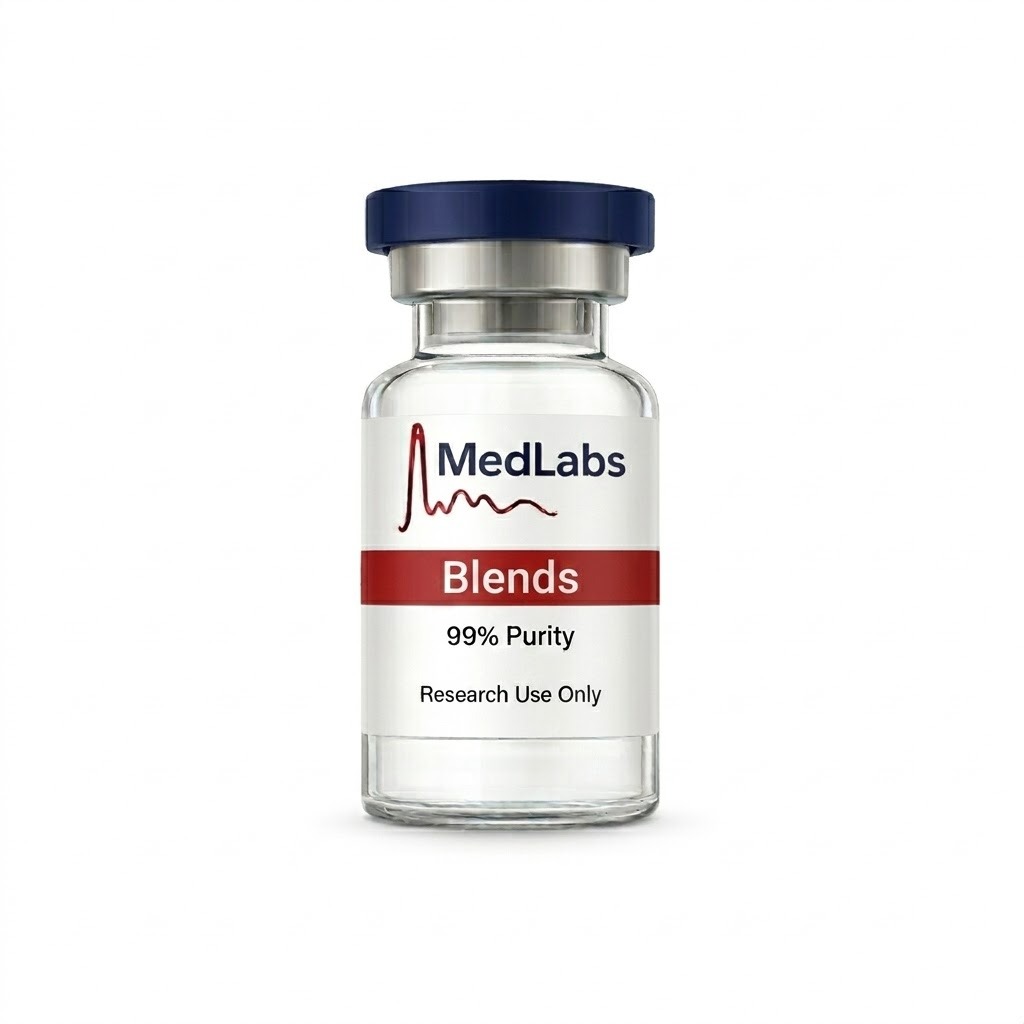
BPC-157 & TB-500 Peptide Blend
Introduction
BPC-157, also known as Body Protection Compound-157 or Pentadecapeptide BPC-157, is a fully synthetic peptide that has attracted scientific interest for its potential role in tissue repair and recovery. Research suggests that it may influence cellular signaling pathways involved in regeneration and healing. Some studies indicate that BPC-157 could support the formation of new blood vessels, help regulate inflammatory responses, and contribute to the protection and restoration of various tissues. Experimental findings have also linked BPC-157 to the healing of muscles, tendons, ligaments, joints, and nerve tissue.
TB-500, a synthetic version of the naturally occurring peptide thymosin beta-4 (Tβ4), has likewise been investigated for its possible regenerative properties. Researchers have proposed that it may support recovery following injuries, including neurological trauma. Additional studies suggest potential roles in wound healing and hair growth. Derived from a peptide naturally expressed within thymus cells and encoded by the TMSB4X gene, TB-500 appears to influence cell migration, differentiation, and tissue repair. It may also promote angiogenesis and cellular renewal through its interaction with multiple signaling pathways.
Both peptides are synthetic polypeptides. TB-500 consists of 43 amino acids, whereas BPC-157 contains 15 amino acids.
Mechanisms of Action
TB-500
Research on thymosin beta-4 suggests that TB-500 may enhance cellular movement by increasing actin protein activity. Scientists believe it regulates the actin cytoskeleton and supports cell migration through interactions with G-actin. A specific amino acid sequence within the peptide, LKKTETQ, is thought to be responsible for actin binding and may contribute to improved tissue repair and wound healing.
Studies have also shown that TB-500 may increase levels of microRNA-146a (miR-146a), which appears to suppress inflammatory signaling pathways involving IRAK1 and TRAF6. Through these mechanisms, TB-500 may exert anti-inflammatory effects that contribute to healing and recovery.
BPC-157
BPC-157 has been proposed to act through several biological pathways related to nitric oxide production, growth factor regulation, tissue regeneration, and inflammatory control. Researchers suggest that it may support endothelial health and encourage the development of new blood vessels. Evidence also indicates that it could stimulate expression of the early growth response-1 (EGR-1) gene, which plays a role in cytokine production, growth factor activity, and extracellular matrix formation, including collagen synthesis.
Additionally, interactions with nerve growth factor-related proteins may influence tissue repair processes. Through these combined actions, BPC-157 may contribute to collagen formation and potentially accelerate wound healing.
Potential Synergy
Since both TB-500 and BPC-157 appear to possess regenerative and tissue-repair properties, combining them may offer complementary effects. Researchers speculate that their combined use could potentially enhance healing processes more effectively than either peptide alone, although direct studies evaluating the blend itself remain unavailable.
Chemical Characteristics
Molecular Formula
- BPC-157: C62H98N16O22
- TB-500: C212H350N56O78S
Molecular Weight
- BPC-157: 1419.5 g/mol
- TB-500: 4963 g/mol
Alternative Names
- BPC-157: Body Protection Compound-157
- TB-500: Thymosin Beta-4
Research Overview
Currently, no published studies have evaluated TB-500 and BPC-157 together in a single experimental model. Existing evidence comes from separate investigations of each peptide.
Tissue Repair and Wound Healing
A 1999 study involving wounded mice found that treatment with thymosin beta-4 accelerated wound closure and significantly improved re-epithelialization compared with saline-treated controls. Researchers concluded that thymosin beta-4 demonstrated strong wound-healing activity.
In a later clinical trial involving individuals with pressure ulcers, treatment with thymosin beta-4 over an 84-day period was associated with observable wound-healing progress.
Research on BPC-157 has also demonstrated enhanced tissue repair. In one animal study, treated subjects developed substantially greater numbers of collagen fibers and blood vessels than placebo-treated controls, suggesting improved healing and tissue regeneration.
Ligament and Tendon Recovery
Studies investigating TB-500 have reported improvements in ligament healing following injury. In one experiment involving surgically damaged medial collateral ligaments, treated animals displayed more organized collagen structure and improved biomechanical properties during recovery.
Separate research on BPC-157 indicated that it may promote tendon healing by encouraging tendon cell growth, migration, and survival. Investigators also observed enhanced resistance to oxidative stress and activation of pathways associated with cellular adhesion and movement, which may contribute to connective tissue repair.
Muscle Regeneration
Animal studies have suggested that BPC-157 may support muscle recovery following injury. In one experiment involving corticosteroid-induced muscle damage, subjects receiving BPC-157 demonstrated near-complete restoration of muscle structure and function, whereas untreated controls showed minimal improvement.
TB-500 has also been explored for its effects on muscle regeneration, particularly in cardiac tissue. Research suggests that it may promote heart cell survival under low-oxygen conditions, encourage angiogenesis, and support cardiac repair mechanisms. Additional studies have indicated that TB-500 may activate signaling pathways associated with cell survival, migration, and tissue regeneration in the heart.
Conclusion
BPC-157 and TB-500 are synthetic peptides that have been extensively investigated for their potential regenerative and tissue-repair properties. Research suggests that both compounds may influence angiogenesis, inflammation, cell migration, and tissue remodeling. While individual studies have demonstrated promising findings across a range of experimental models, direct research examining the combined use of BPC-157 and TB-500 remains limited. Consequently, any proposed synergistic effects of the peptide blend remain theoretical and require further scientific investigation.
Note: BPC-157 & TB-500 peptide blends are intended for research and laboratory use only.
This version removes repetition, improves clarity, and adopts a more professional, scientifically neutral tone while retaining the key findings and claims from the original text.
Reviews
There are no reviews yet.