
Description
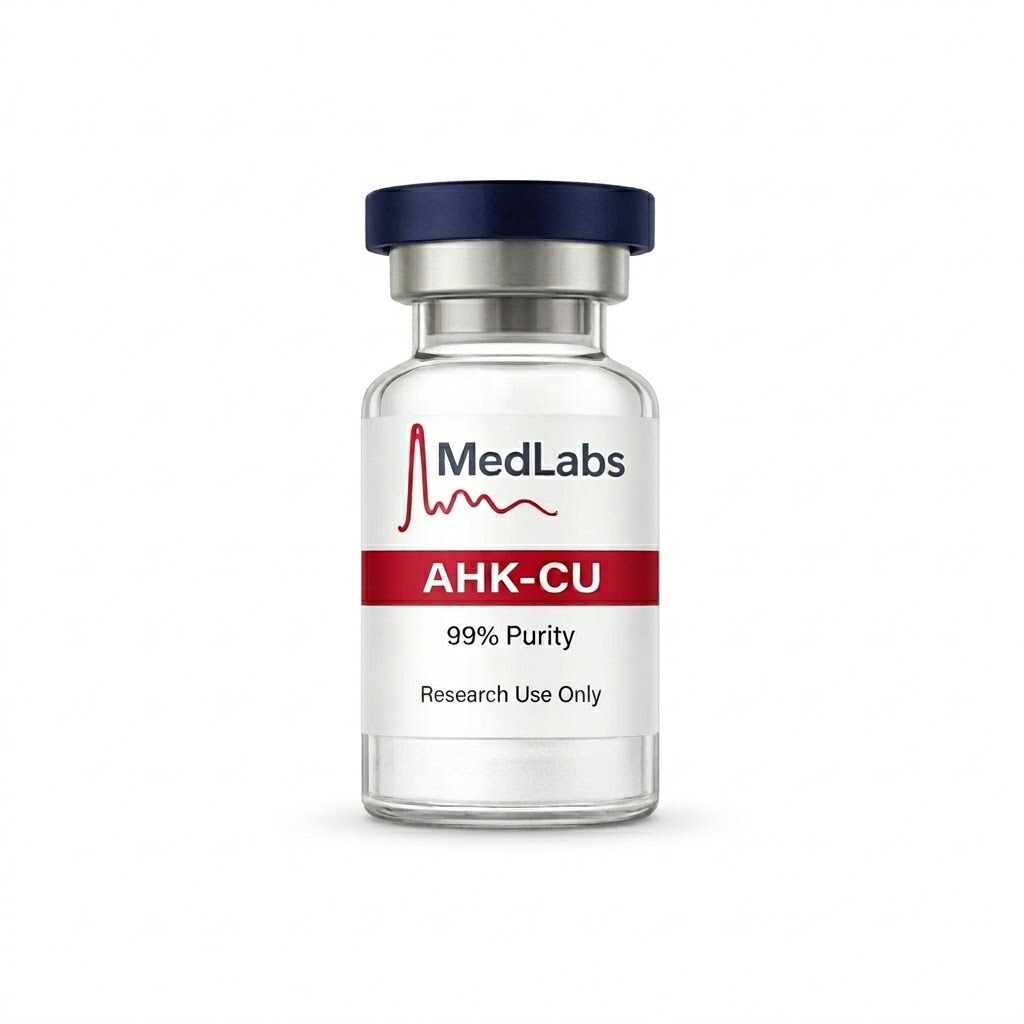
AHK-CU Peptide – Research-Grade Copper Tripeptide
Overview of AHK-CU
AHK-CU is a copper-binding tripeptide composed of alanine, histidine, and lysine. It exists naturally in biological systems. Researchers classify it as a regenerative biology peptide with signaling relevance.
Moreover, AHK-CU peptide interacts with cellular pathways linked to structural protein synthesis. It remains widely studied for its involvement in extracellular matrix activity. Therefore, it attracts attention in tissue modeling and peptide-based regeneration research.
Additionally, this compound features a coordinated copper ion. This element contributes to enzyme-related activity in laboratory studies. As a result, researchers investigate its role in collagen and elastin signaling pathways.
At MedLabs Peptides, all the peptide products meet strict research-grade standards. Every batch undergoes purity verification and controlled handling.
Quick Specifications
- Molecular Formula: C15H25CuN6O4
- Molecular Weight: 416.9 g/mol
- CAS Number: Not publicly standardized
- Purity: ≥98% (HPLC verified)
- Appearance: Blue lyophilized powder
- Storage: Store at -20°C in a dry environment
- Solubility: Soluble in sterile water
- Pack Size: Multiple research vial options available
Mechanism of Action of AHK-CU Peptide
The peptide operates through cellular signaling and receptor interaction. It binds with copper ions to influence enzymatic processes. Consequently, it contributes to pathways associated with extracellular matrix regulation.
Researchers study its interaction with fibroblast cells. These cells regulate structural proteins and growth factors. Therefore, AHK-CU is investigated for its role in VEGF expression and angiogenesis signaling.
Additionally, studies explore how this peptide affects apoptosis-related markers. It may influence the Bcl-2/Bax ratio in controlled environments. As a result, it becomes relevant in cell survival pathway research.
When comparing AHK-CU vs GHK-CU, differences appear in amino acid structure and binding behavior. While both peptides bind copper, their signaling pathways differ. Therefore, comparative peptide research remains essential.
Scientists continue asking, what is AHK-CU peptide used for? It is studied for cellular communication and structural protein pathways. However, it is not approved for therapeutic use.
Research Applications of AHK-CU
- Cell-based research involving fibroblast activity
- Animal model studies focused on tissue signaling
- Receptor binding and peptide interaction analysis
- Comparative studies such as AHK-CU vs GHK-CU
- Signal transduction pathway investigations
- Hair follicle and extracellular matrix research models
Common Research Questions About AHK-CU
What is AHK-CU used for in research?
Researchers study AHK-CU peptide for cellular signaling, collagen pathways, and extracellular matrix activity.
Does AHK-CU affect cellular pathways?
Yes, it is investigated for its influence on VEGF signaling and apoptosis-related markers.
What is the difference between GHK-Cu and AHK-CU?
AHK-CU differs in amino acid structure. It shows distinct receptor binding and signaling behavior.
How long can you take GHK-Cu for?
This question relates to human use. However, not all peptides sold by MedLabs Peptides are for consumption.
AHK-CU vs GHK-CU: which is better?
Both peptides serve different research purposes. Selection depends on experimental design.
Handling & Storage Guidelines
- Store lyophilized peptide at -20°C for long-term stability
- Reconstitute using sterile laboratory-grade solvents
- Avoid repeated freeze-thaw cycles
- Protect from direct light exposure
- Maintain controlled laboratory conditions at all times
Safety & Compliance
This product is for research use only.
It is not intended for human or veterinary use.
No clinical or therapeutic applications are approved.
All researchers must follow institutional and regulatory guidelines.
MedLabs Peptides supplies compounds strictly for laboratory investigation.
Why Choose MedLabs Peptides
MedLabs Peptides delivers consistent quality and verified purity. Every product meets ≥98% purity standards. Additionally, third-party testing ensures accuracy.
Furthermore, secure packaging protects peptide stability during transit. Fast fulfillment supports ongoing research timelines. Therefore, researchers trust MedLabs Peptides for reliable compounds.
Explore product specifications and browse available compounds at medlabspeptides.com.
Reviews
There are no reviews yet.