
Description
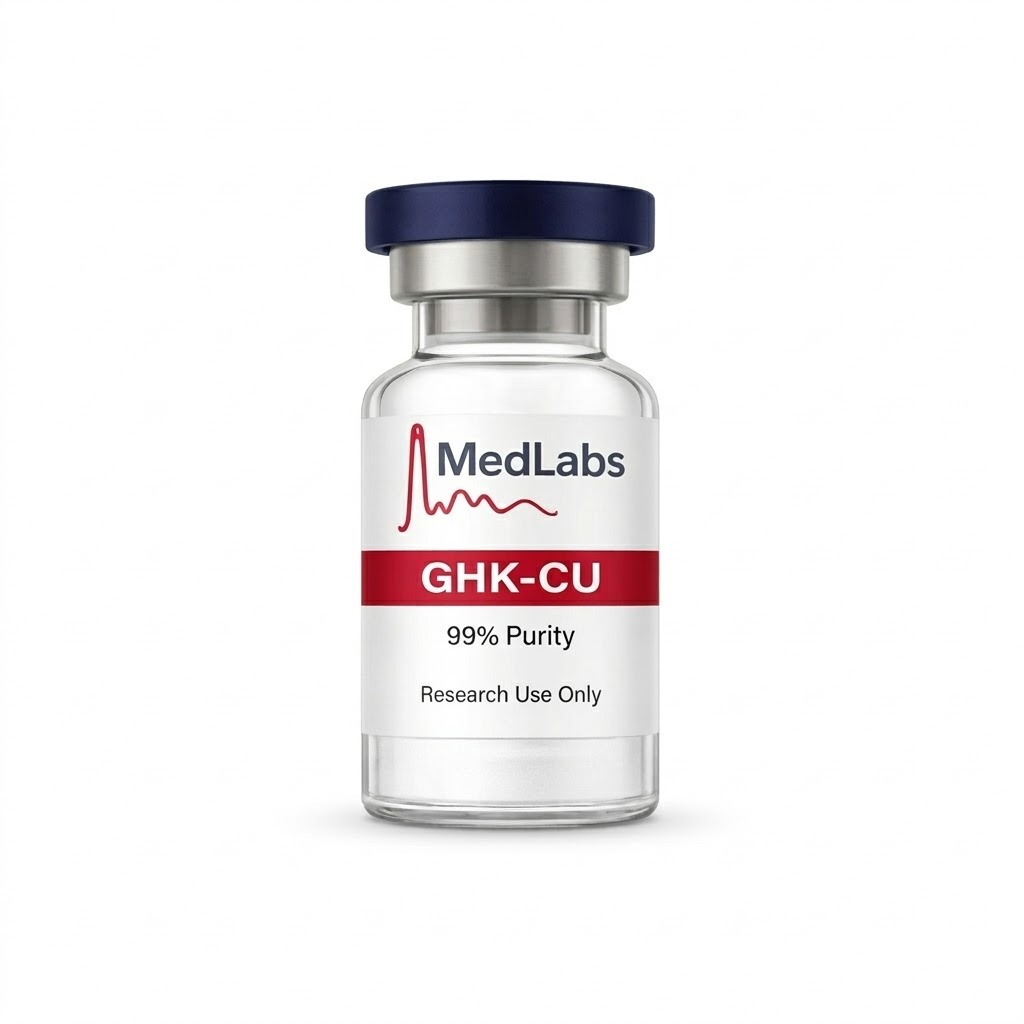
GHK-CU Peptide – Research-Grade Copper Tripeptide Profile
Overview of GHK-CU Peptide
GHK-CU is a naturally occurring copper-binding tripeptide studied in regenerative research.
Researchers classify it as a copper peptide complex with strong biological signaling potential.
The peptide contains glycine, histidine, and lysine bound to copper ions.
Therefore, this structure enhances stability and cellular delivery efficiency.
Scientists explore the peptide benefits in tissue remodeling and cellular repair pathways.
Moreover, studies link this compound to extracellular matrix regulation and immune signaling.
At Medlab Peptides, supplies high-purity GHK-CU for controlled research environments.
Consequently, researchers access consistent material for reproducible laboratory studies.
Quick Specifications
- Molecular Formula: C14H23CuN6O4
- Molecular Weight: 340.38 g/mol
- CAS Number: Not consistently assigned
- Purity: ≥98% (research grade)
- Appearance: Blue crystalline powder
- Storage: Store at -20°C, dry conditions
- Solubility: Soluble in sterile water
- Pack Size: 10mg / 50 mg/custom research quantities
Mechanism of Action of GHK-CU Peptide
Cell Signaling and Collagen Activation
The peptide interacts with fibroblast receptors to influence collagen synthesis pathways.
As a result, it may regulate extracellular matrix proteins such as elastin and glycosaminoglycans.
Additionally, ghk cu copper peptide activity appears linked to gene expression modulation.
Therefore, researchers associate it with tissue remodeling and structural protein formation.
Antioxidant and Anti-Inflammatory Pathways
The peptide may reduce oxidative stress by limiting reactive oxygen species formation.
Furthermore, it influences inflammatory signaling pathways like NF-κB and MAPK cascades.
Because of this, ghk cu peptide benefits include cellular protection under stress conditions.
Moreover, copper ions support enzymatic activity linked to antioxidant defense systems.
Signal Transduction and Cellular Repair
The peptide may activate pathways involved in angiogenesis and cell migration.
For example, ERK and growth-related pathways appear to be influenced in experimental models.
Consequently, researchers compare the ghk cu peptide supplement’s potential with other regenerative peptides.
Additionally, studies explore synergy with compounds like hyaluronic acid in dermal systems.
Research Applications of GHK-CU
- Cell-based research on fibroblast proliferation
- Animal model studies on wound repair processes
- Receptor binding studies involving copper-peptide complexes
- Comparative peptide research with other regenerative compounds
- Signal transduction studies in oxidative stress environments
Common Research Questions About GHK-CU
What is GHK-CU peptide used for in research?
Researchers use it to study collagen synthesis, tissue regeneration, and antioxidant pathways.
Additionally, it supports investigations into cellular repair and extracellular matrix signaling.
Does GHK-CU affect inflammatory signaling pathways?
Yes, It may influence NF-κB and cytokine-related pathways in experimental settings.
Therefore, it remains relevant in inflammation-focused research models.
GHK-CU vs similar peptides in research models?
It differs due to its copper-binding structure and signaling versatility.
Meanwhile, other peptides may lack comparable antioxidant and matrix-regulating properties.
What are the side effects of GHK-CU in studies?
Research focuses on cellular responses rather than clinical outcomes.
Therefore, findings remain limited to controlled laboratory environments.
How much GHK-CU should researchers use daily?
Laboratory protocols vary depending on study design and model systems.
Thus, researchers follow validated experimental dosing frameworks only.
Handling and Storage Guidelines
- Store GHK-CU at -20°C for long-term stability
- Protect from direct light and moisture exposure
- Reconstitute using sterile water or buffered solutions
- Avoid repeated freeze-thaw cycles
- Use freshly prepared solutions for optimal stability
Safety and Compliance
GHK-CU is strictly FOR RESEARCH USE ONLY.
It is not approved for human or veterinary applications.
Furthermore, this compound is not intended for therapeutic or diagnostic use.
Researchers must follow all laboratory safety and regulatory guidelines.
Medlab Peptides supplies research materials with full compliance standards.
Therefore, all responsibility lies with qualified laboratory professionals.
Henry K –
I started this for skin-related support. It’s widely discussed in cosmetic peptide communities for its connection to skin appearance, collagen activity, and regeneration processes. Over time, it’s often associated with improved skin tone, texture, and a more refreshed overall look.
Sissy A –
I used this mainly for skin support, and after a while my skin just looked more even and refreshed. It felt like my overall skin quality improved gradually.