
Description
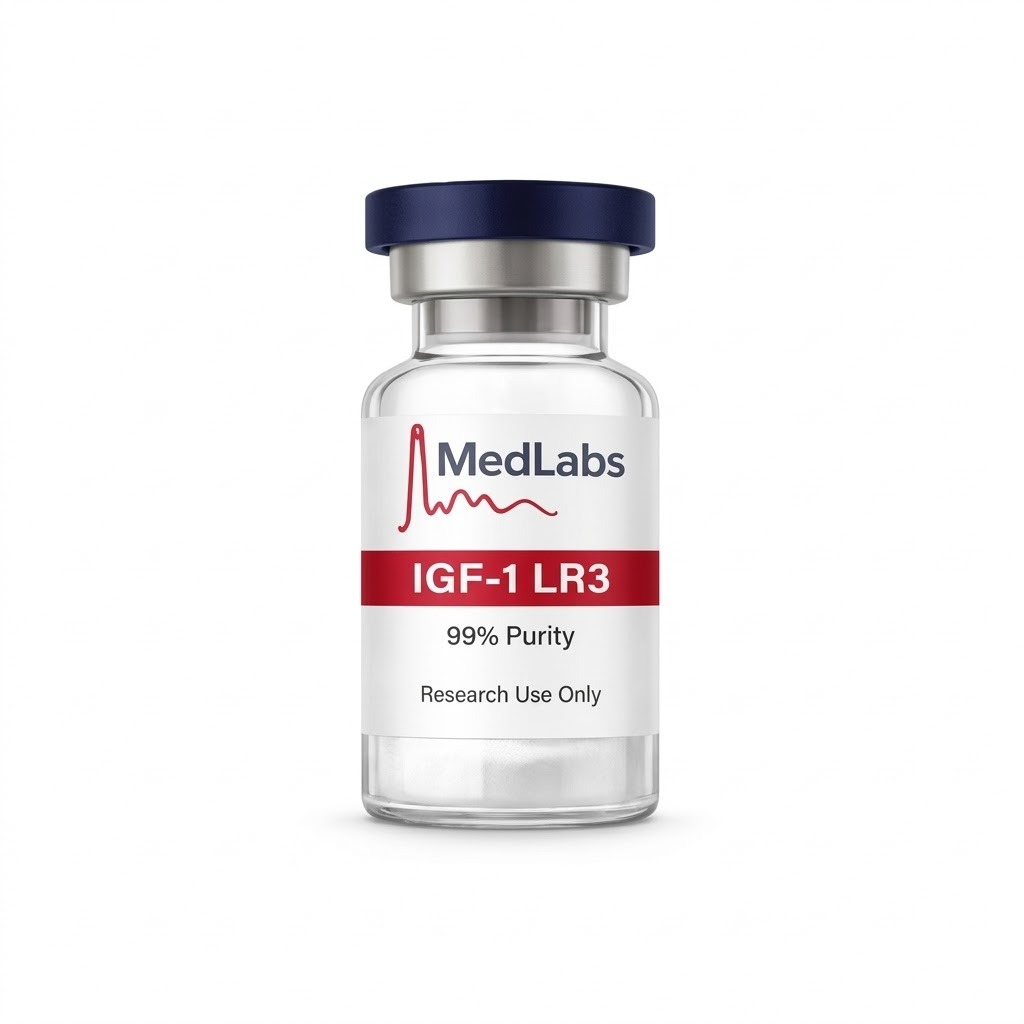
IGF-1 LR3 Peptide – Research-Grade Insulin-Like Growth Factor Analog
Quick Specifications
IGF-1 LR3
- Molecular Formula: C₄₀₀H₆₂₅N₁₁₁O₁₁₅S₁
- Molecular Weight: ~9,200 Da
- CAS Number: Not standardized
- Purity: ≥98% (HPLC verified)
- Appearance: White lyophilized powder
- Solubility: Soluble in sterile water or mild acidic solutions
- Storage: -20°C (long-term), 2–8°C after reconstitution
- Pack Size: 1 mg / 2 mg / 5 mg
Overview of IGF-1 LR3
It is a synthetic peptide analog derived from insulin-like growth factor-1. It contains an arginine substitution and an extended amino acid chain. As a result, the compound exhibits improved stability in controlled research settings.
This peptide belongs to the growth factor class. Therefore, researchers widely use it to study cellular signaling and metabolic pathways. Moreover, IGF-1 LR3 peptides demonstrate reduced binding to IGF-binding proteins. Consequently, this increases availability in experimental systems.
In addition, the extended half-life distinguishes it from native IGF-1. Researchers often select it for prolonged receptor interaction studies. Furthermore, it supports investigations into protein synthesis and cellular proliferation.
Overall, it remains a valuable compound for laboratory-based biochemical research.
Mechanism of Action of IGF-1 LR3
it binds primarily to the IGF-1 receptor. This receptor functions as a transmembrane tyrosine kinase. Once activated, it triggers intracellular signaling cascades.
Specifically, the PI3K/Akt and MAPK/ERK pathways become activated. These pathways regulate cell growth, survival, and differentiation. Therefore, researchers exploring what IGF-1 LR3 is used for often focus on these mechanisms.
Additionally, it shows reduced affinity for binding proteins. As a result, it remains active longer within experimental systems. This property supports studies addressing what does IGF-1 do for men at a molecular level.
Moreover, receptor binding efficiency enhances signal duration. Consequently, scientists use it in comparative peptide research. Its peptides also assist in evaluating metabolic and anabolic signaling responses.
Research Applications of IGF-1 LR3 Peptides
- Cell-based proliferation and differentiation assays
- Animal model studies for growth signaling pathways
- Receptor binding and activation experiments
- Comparative peptide structure-function analysis
- Signal transduction pathway investigations
Common Research Questions About IGF-1 LR3
What is IGF-1 LR3 used for in research?
Researchers use it to analyze cellular growth pathways and receptor signaling behavior.
Does IGF-1 LR3 affect intracellular signaling pathways?
Yes, it influences PI3K/Akt and MAPK pathways during controlled experimental conditions.
IGF-1 LR3 vs similar peptides – what are the differences?
It shows extended stability and reduced binding protein interaction compared to native forms.
Who should avoid taking IGF-1?
This compound is strictly for laboratory research and not suitable for human exposure.
Handling and Storage Guidelines
- Store lyophilized powder at -20°C for stability
- Reconstitute using sterile water or buffer solution
- Avoid repeated freeze-thaw cycles
- Protect from light and humidity exposure
- Use the reconstituted solution within 7–14 days
Safety and Compliance
FOR RESEARCH USE ONLY
This product is not intended for human or veterinary use.
It must not be used for therapeutic or diagnostic purposes.
All handling must occur in qualified laboratory environments.
Researchers bear full responsibility for regulatory compliance.
Conclusion
It remains a widely studied peptide in biochemical research. Its extended activity supports detailed pathway analysis. Furthermore, its structural modifications enhance experimental reliability. Therefore, laboratories continue to rely on IGF-1 LR3 peptides for advanced signaling studies.
Reviews
There are no reviews yet.